


Overview
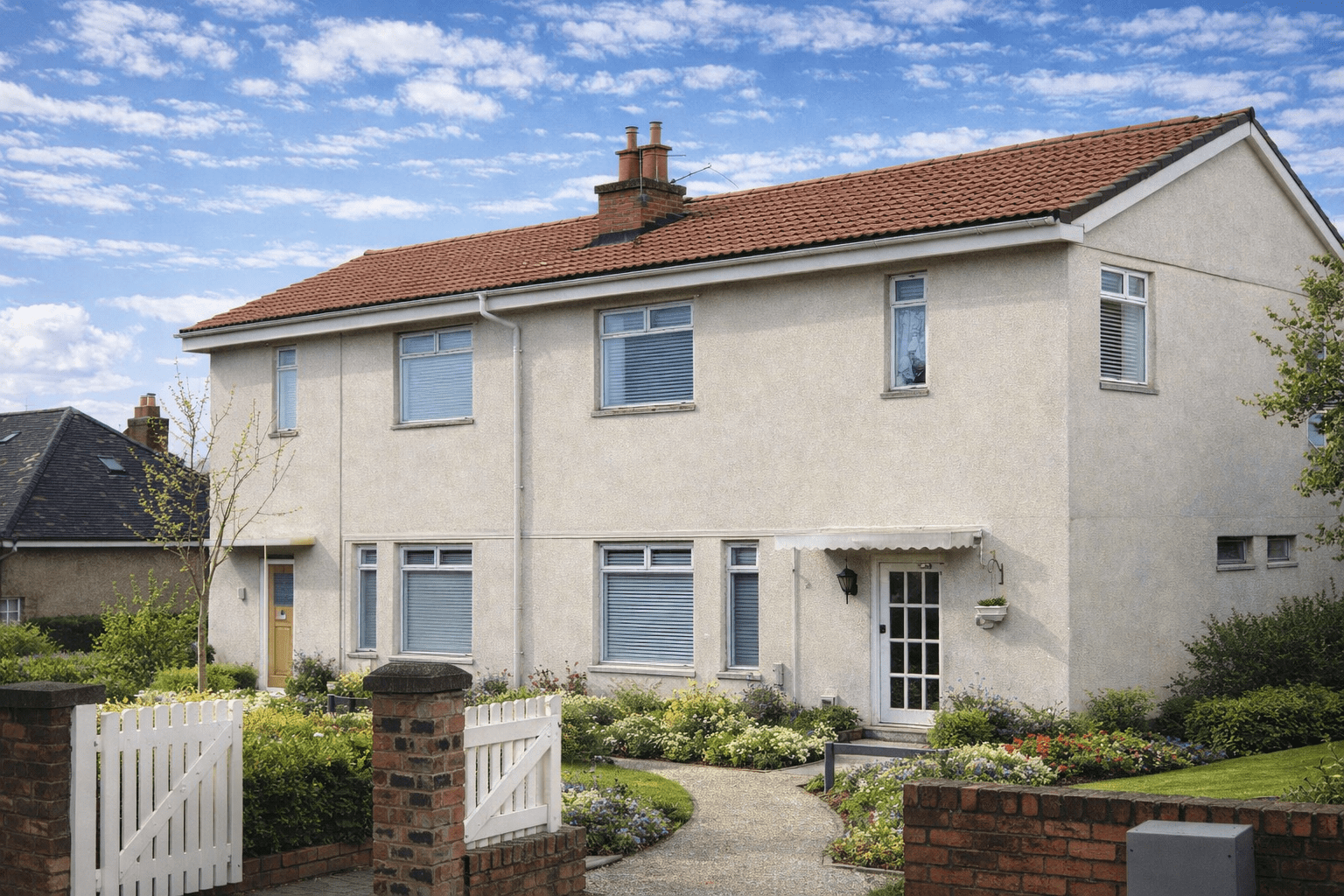
The Connell House, also known as the Phoenix, is a rare post-war non-traditional house type developed immediately after the Second World War. Designed by Sam Buxton & Associates and manufactured by J N Connell Ltd, only two examples were constructed in 1946, both as two-storey semi-detached houses.
Connell Houses (Phoenix) were an experimental response to post-war housing shortages. With only two ever built, they are exceptionally uncommon within the UK housing stock.
Typical characteristics & construction
Connell Houses are two-storey semi-detached properties constructed using a steel frame with precast concrete components. The design reflects immediate post-war experimentation with alternative building systems.
External walls are formed from rendered storey-height precast concrete panels with mineral wool insulation. Internally, timber battens and plasterboard linings are used. The roof is a shallow pitch gable covered with profiled asbestos cement sheets.
Distinctive identifying features include precast concrete fascia and soffits, a precast concrete canopy over the front door, and characteristic ground floor front elevation windows with a wide and narrow opening separated by a mullion.
| Element | Typical construction | Inspection focus |
|---|---|---|
| Substructure | Concrete strip foundations with brick under-building and PC plinth | Damp proof course condition, moisture ingress, movement |
| Frame | Tubular steel stanchions with PC beams and RSA roof members | Corrosion, protective coating breakdown |
| External walls | Rendered storey-height precast concrete panels with mineral wool insulation | Cracking, render condition, moisture penetration |
| Roof | Shallow pitch gable roof with asbestos cement sheets | Sheet condition, fixings, weathering |
| Floors | Timber floors with T&G boarding | Sagging, rot, insect attack |
Potential hazards & inspection priorities
The most significant risks associated with Connell Houses relate to asbestos-containing materials and the long-term durability of the steel frame. Asbestos cement roofing is stable if undisturbed but presents a health risk if damaged or improperly altered.
Corrosion of tubular steel stanchions and rolled steel roof members is a key inspection priority, particularly where protective coatings have deteriorated. Moisture ingress at precast panel joints and around the damp proof course also requires careful assessment.
Is this house right for you?
Purchasers considering a Connell House should be comfortable with non-traditional construction and the need for informed maintenance decisions based on specialist inspection.
- Commission a full building survey
- Review previous repairs and protective treatments
- Understand asbestos management responsibilities
Condition varies significantly and should be assessed on an individual property basis.
Mortgage & resale considerations
Mortgage availability for Connell Houses can be influenced by their rarity, construction method, and current condition. Lender attitudes may vary, and clear professional reporting is often required.
Evidence of effective maintenance, controlled corrosion risk, and managed asbestos-containing materials can be influential in lending and resale decisions.
What a survey can — and cannot — tell you
A building survey provides an informed assessment of the visible condition and construction of a Connell House. Inspections are non-intrusive and limited to areas that are accessible at the time of inspection.
- Identify visible deterioration to precast concrete panels and render
- Assess signs of dampness, moisture ingress, and condensation risk
- Comment on asbestos cement roof coverings and external envelope condition
- Review the general condition of accessible floors, ceilings, and steel elements
- Highlight defects that may require repair, monitoring, or further investigation
However, there are limitations to what a survey can determine without intrusive investigation.
- Confirm the condition of concealed steelwork within walls or floors
- Assess hidden structural elements behind linings or finishes
- Determine the internal condition of asbestos-containing materials
- Inspect areas that are inaccessible or covered at the time of inspection
Where higher-risk indicators are identified, further specialist or intrusive investigation may be recommended.
For a thorough building survey in Greater London, an instant quotation can be obtained through the online survey calculator.
Considering a Connell House?
A detailed building survey can help clarify construction-specific risks before committing to a purchase.
Get your instant survey quoteDisclaimer: This article is provided for general educational purposes only and is based on industry research, professional knowledge, and experience. It does not relate to any specific property and should not be relied upon when making a purchasing decision. Prospective purchasers should always commission an independent RICS-qualified surveyor to conduct a full inspection and provide a report on the actual condition of any property of interest.
