


Overview
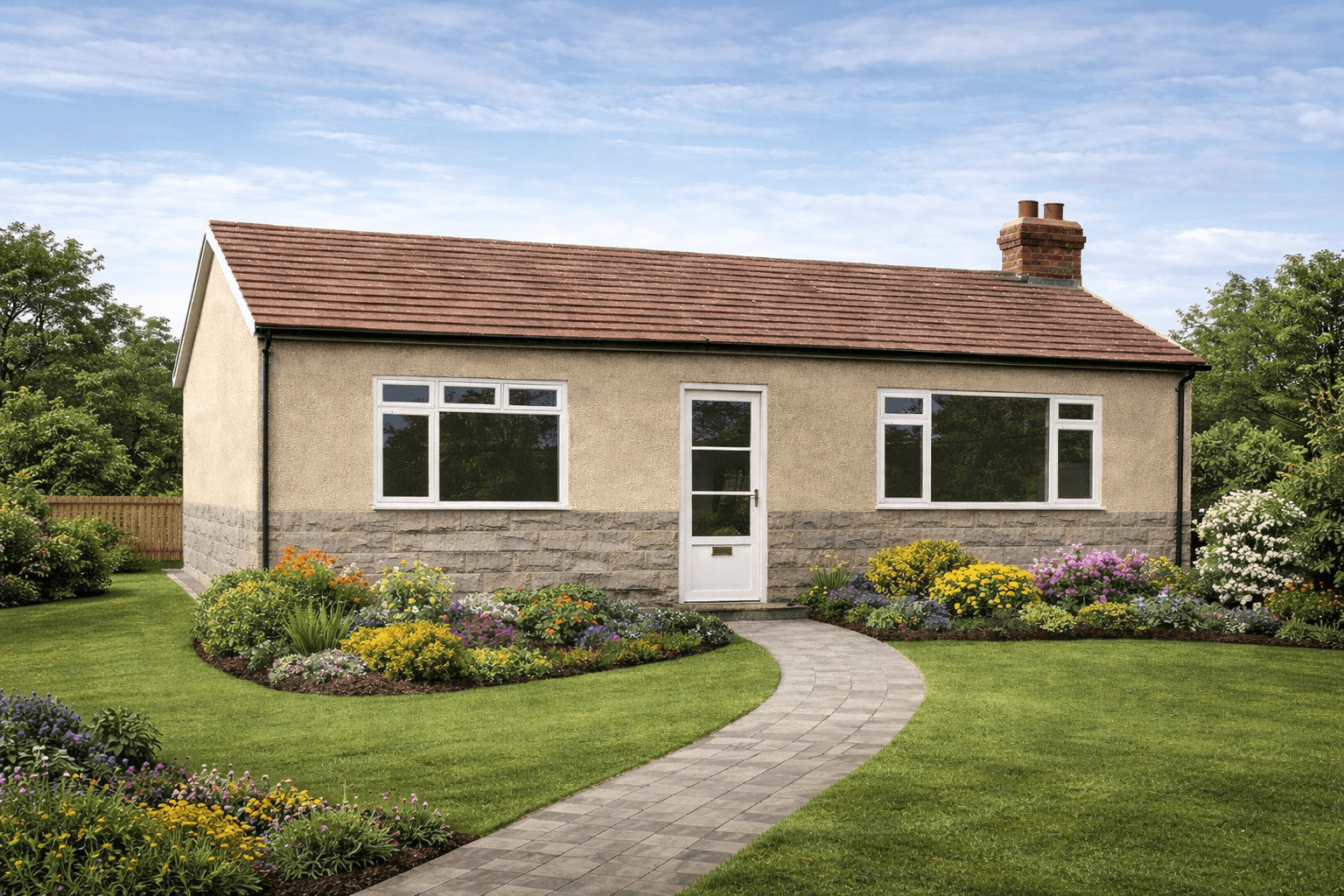
The Caldervale house is a rare form of non-traditional housing dating from the mid-1960s. Built in 1965 by Caldervale Construction Co. Ltd, only around ten examples were constructed. These properties, sometimes referred to as “Roberts” houses, are typically found in small numbers across selected parts of the UK and are most commonly encountered as detached or semi-detached bungalows.
Caldervale houses were system-built dwellings developed during a period of rapid post-war housing demand. Their limited numbers make them an uncommon construction type, and understanding their materials and build method is essential before purchase.
Typical characteristics & construction
Caldervale houses are single-storey bungalows with medium pitch gable roofs. Roof coverings vary and may include slates, tiles, or glass fibre sheets. The overall form reflects the drive for efficient construction during the 1960s.
External walls are formed using a platform timber frame system. Storey-height timber panels are directly clad with aggregate-finished asbestos cement sheets or glass fibre panels up to window sill level, with some properties incorporating vertical timber boarding above.
Internally, walls are lined with plasterboard, with mineral fibre insulation placed between the timber studs. Internal partitions are understood to be timber stud construction with plasterboard linings.
| Element | Typical construction | Inspection focus |
|---|---|---|
| Substructure | Concrete slab with damp-proof course | Cracking, movement, moisture protection |
| External walls | Timber frame with asbestos cement or glass fibre panels | Panel condition, damage, weathering |
| Roof | Timber trusses with slate, tile, or glass fibre covering | Covering condition, timber defects |
| Internal walls | Timber stud with plasterboard lining | Dampness, distortion, surface condition |
| Ground floor | Concrete floor slab | Levelness, cracking, finishes |
Potential hazards & inspection priorities
A primary consideration with Caldervale houses is the presence of asbestos cement panels within the external wall construction. While generally stable when undisturbed, these materials present health risks if damaged or altered and require appropriate management.
The timber frame structure should also be carefully assessed. Inadequate maintenance can lead to rot or insect infestation, particularly where moisture ingress has occurred. Attention should be given to junctions, ground-level details, and exposed elements.
Is this house right for you?
Purchasing a Caldervale house requires an understanding of non-traditional construction and the responsibilities that come with maintaining original materials and systems.
- Confirm the condition of external panels and timber framing
- Understand the implications of asbestos-containing materials
- Review any alterations or upgrades for compliance and impact
Mortgage & resale considerations
As with many non-traditional properties, lender and purchaser attitudes can be influenced by construction type and documented condition. Clear professional reporting and evidence of appropriate maintenance are important considerations.
Any significant defects or unmanaged materials are likely to attract closer scrutiny during valuation or resale.
What a survey can — and cannot — tell you
A building survey provides an informed assessment of the visible condition and construction of a Caldervale house. Inspections are non-intrusive and limited to areas that are accessible at the time of inspection.
- Identify visible defects to external wall panels and timber framing
- Assess signs of dampness, moisture ingress, and condensation risk
- Comment on roof coverings, drainage details, and external envelope condition
- Review the general condition of accessible floors, ceilings, and structural elements
- Highlight defects that may require repair, monitoring, or further investigation
However, there are limitations to what a survey can determine without intrusive investigation.
- Confirm the condition of concealed timber elements
- Assess hidden structural components behind linings or panels
- Determine the full condition of asbestos-containing materials
- Inspect areas that are inaccessible or covered at the time of inspection
Where higher-risk indicators are identified, further specialist or intrusive investigation may be recommended.
For a thorough building survey in Greater London, an instant quotation can be obtained through the online survey calculator.
Considering a Caldervale house?
A detailed building survey can help clarify construction-specific risks before committing to a purchase.
Get your instant survey quoteDisclaimer: This article is provided for general educational purposes only and is based on industry research, professional knowledge, and experience. It does not relate to any specific property and should not be relied upon when making a purchasing decision. Prospective purchasers should always commission an independent RICS-qualified surveyor to conduct a full inspection and provide a report on the actual condition of any property of interest.
