


Overview
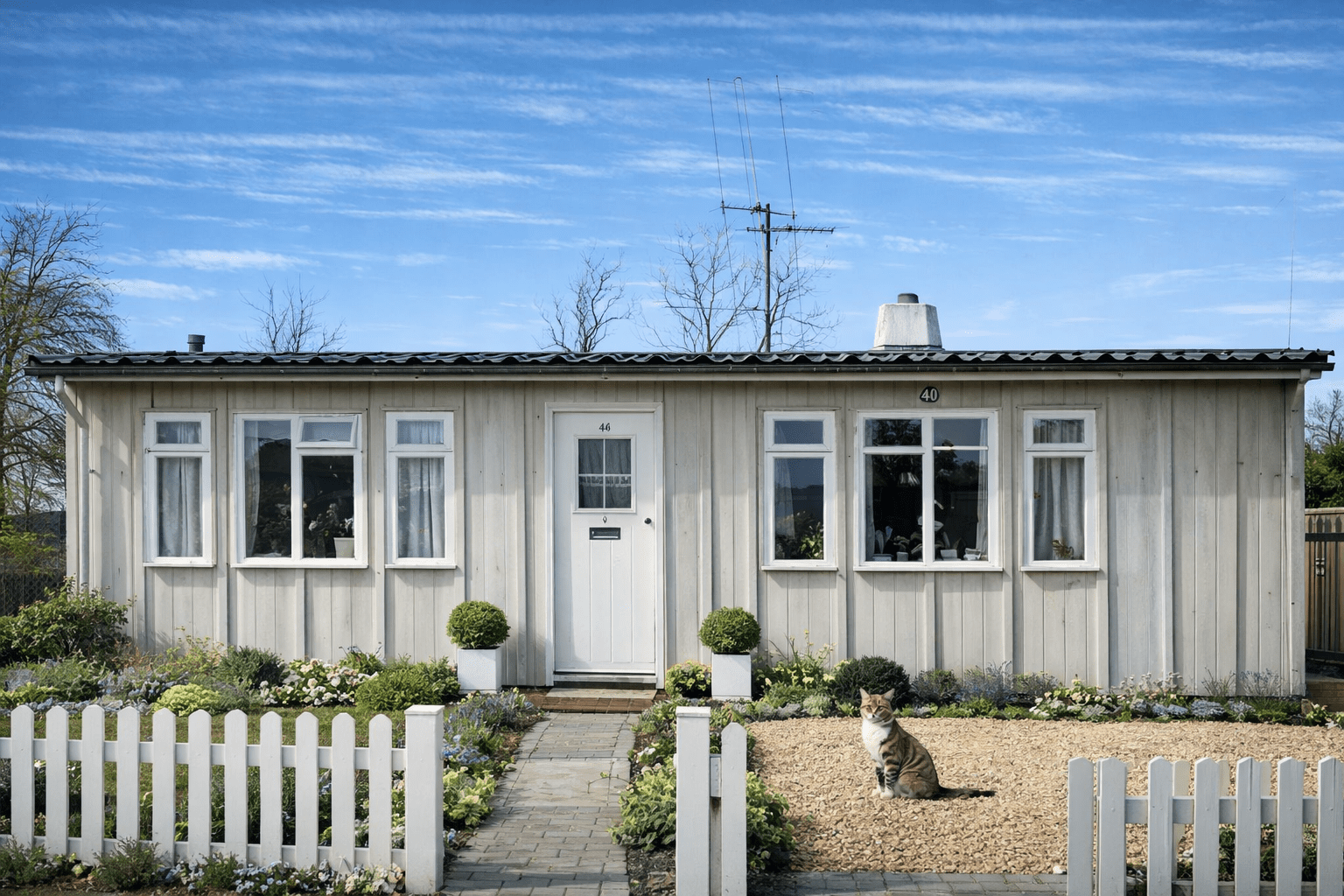
The Universal Temporary Bungalow, often referred to as a “Prefab” or “Universal Mk III”, is a form of non-traditional housing developed during the 1940s. These properties were introduced as a rapid response to post-war housing shortages and were originally intended as short-term accommodation.
Universal Temporary Bungalows were designed for quick assembly using standardised components. Although intended to be temporary, many examples remain in use today, particularly in suburban and rural settings.
Typical characteristics & construction
Universal Temporary Bungalows are generally detached, single-storey dwellings. They are readily identified by shallow pitch gable roofs clad in profiled asbestos cement sheets, with matching asbestos cement wall panels.
A metal chimney cowl is a common external feature. These bungalows were frequently constructed on sites where land availability allowed rapid deployment, with limited emphasis on long-term durability.
Detailed construction records are often unavailable. As a result, aspects of the substructure, internal partitions, and floor build-ups are not always clearly documented, which can complicate inspection and assessment.
| Element | Typical construction | Inspection focus |
|---|---|---|
| Substructure | Details often undocumented | Signs of settlement or movement |
| External walls | Asbestos cement panels | Condition, fixing stability, surface degradation |
| Roof | Shallow pitched asbestos cement sheets | Sheet condition, fixings, weathering |
| Chimney | Metal cowl and lightweight flue | Corrosion, stability, weathering |
Potential hazards & inspection priorities
The most significant hazard associated with Universal Temporary Bungalows is the presence of asbestos cement. While generally stable if undisturbed, deterioration or damage increases the risk of fibre release.
The temporary design intent also means insulation standards, weather resistance, and overall durability fall well short of modern expectations. Moisture ingress, poor thermal performance, and ageing services are common inspection priorities.
Is this house right for you?
Universal Temporary Bungalows require a clear understanding of non-traditional construction and a realistic approach to ongoing maintenance, inspection, and potential upgrading works.
- Commission a full building survey with asbestos awareness
- Assess current condition rather than original design intent
- Plan for material management and future repair needs
Mortgage & resale considerations
Lender attitudes to non-traditional properties vary and are influenced by construction type, condition, and professional reporting. Asbestos content and lack of detailed construction records can affect lending decisions.
Clear survey documentation and evidence of appropriate management of materials are commonly important considerations.
What a survey can — and cannot — tell you
A building survey provides an informed assessment of the visible condition and construction of a Universal Temporary Bungalow. Inspections are non-intrusive and limited to areas that are accessible at the time of inspection.
- Identify visible damage or deterioration to asbestos cement panels
- Assess signs of dampness, moisture ingress, and condensation risk
- Comment on roof coverings, chimney details, and external envelope condition
- Review the general condition of accessible floors, walls, and ceilings
- Highlight defects that may require repair, monitoring, or further investigation
However, there are limitations to what a survey can determine without intrusive investigation.
- Confirm the internal condition of asbestos-containing materials
- Assess concealed structural elements behind linings or panels
- Determine the full extent of material degradation not visibly apparent
- Inspect areas that are inaccessible or covered at the time of inspection
Where higher-risk indicators are identified, further specialist or intrusive investigation may be recommended.
For a thorough building survey in Greater London, an instant quotation can be obtained through the online survey calculator.
Considering a Universal Temporary Bungalow?
A detailed building survey can help clarify construction-specific risks before committing to a purchase.
Get your instant survey quoteDisclaimer: This article is provided for general educational purposes only and is based on industry research, professional knowledge, and experience. It does not relate to any specific property and should not be relied upon when making a purchasing decision. Prospective purchasers should always commission an independent RICS-qualified surveyor to conduct a full inspection and provide a report on the actual condition of any property of interest.
