


Overview
The Symplex house is a form of system-built, non-traditional housing developed in the mid-1960s as part of wider efforts to address housing demand using industrialised construction methods. These properties are most commonly found in semi-detached and terraced layouts and remain a recognisable but relatively uncommon housing type.
Symplex houses were primarily constructed around 1965 by C Cornes & Sons Ltd and Cussins Ltd, with design input from Forshaw, Greaves & Partners. They are also known as Cornes, Cornes Cussins, or Cussins Cornes houses.
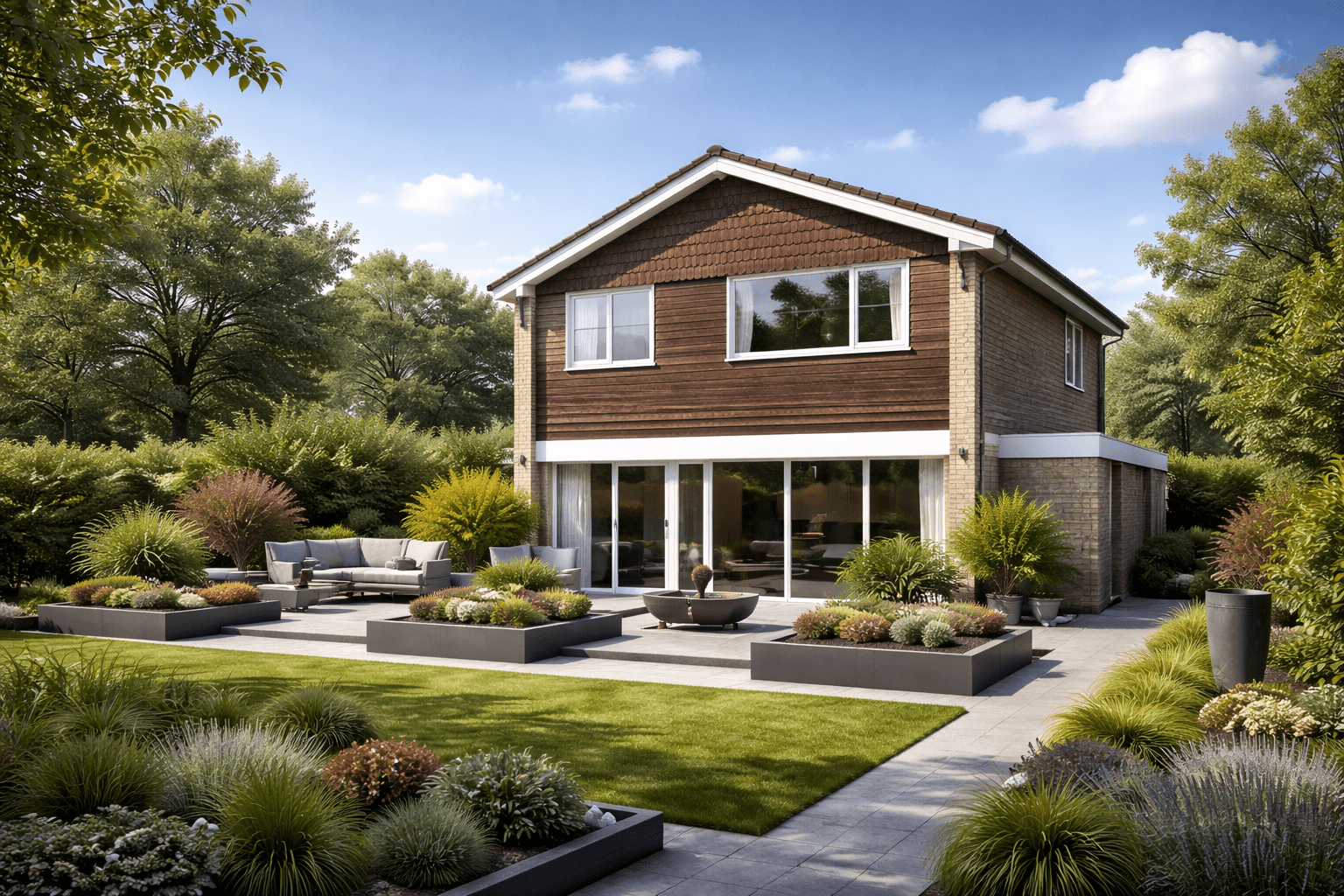
Typical characteristics & construction
Symplex houses are two-storey dwellings constructed using a structural steel frame with infill wall panels. Roofs are usually shallow-pitched gables or flat in form, originally finished with plastic roof sheets or interlocking concrete tiles.
Front and rear elevations are formed from storey-height timber frame panels incorporating openings, clad externally with shiplap boarding and tile-faced precast concrete panels. Gable walls are typically fully clad in tile-faced precast concrete panels.
| Element | Typical construction | Inspection focus |
|---|---|---|
| Substructure | Concrete pads and perimeter-thickened slab with DPC | Settlement, cracking, damp-proof course continuity |
| Main frame | Steel stanchions, beams, and trusses with Kariscol joints | Corrosion, protective coating condition |
| External walls | Timber panels with shiplap boarding and PC panels | Moisture ingress, timber decay, panel movement |
| Floors | Concrete ground floor, chipboard or plywood upper floor | Deflection, dampness, joint integrity |
| Roof | Timber purlins with plastic sheets or concrete tiles | Covering failure, leaks, drainage details |
Potential hazards & inspection priorities
The primary risks associated with Symplex houses relate to moisture management, timber durability, and ageing materials. Timber panels can deteriorate where protective finishes fail, and steel components rely on the continued effectiveness of original protective coatings.
Stramit boards used within wall and partition construction require careful consideration due to their moisture sensitivity and fire performance. Asbestos-containing materials may also be present in some components.
Is this house right for you?
Symplex houses can be suitable for purchasers who understand non-traditional construction and are prepared to assess the property on its individual condition rather than age alone.
- Commission a full building survey
- Review evidence of maintenance and alterations
- Understand the implications of system-built construction
Mortgage & resale considerations
Mortgage acceptance for system-built properties can vary between lenders and may be influenced by construction type, condition, and the clarity of professional reporting.
Clear survey advice, documented repairs, and the absence of unresolved defects are commonly influential factors.
What a survey can — and cannot — tell you
A building survey provides an informed assessment of the visible condition and construction of a Symplex house. Inspections are non-intrusive and limited to areas that are accessible at the time of inspection.
- Identify visible deterioration to timber panels and external cladding
- Assess signs of dampness, moisture ingress, and condensation risk
- Comment on roof coverings, drainage details, and external envelope condition
- Review the general condition of accessible floors, ceilings, and structural elements
- Highlight defects that may require repair, monitoring, or further investigation
However, there are limitations to what a survey can determine without intrusive investigation.
- Confirm the condition of concealed steel connections or fixings
- Assess hidden timber elements behind linings or panels
- Determine the full extent of deterioration within concealed materials
- Inspect areas that are inaccessible or covered at the time of inspection
Where higher-risk indicators are identified, further specialist or intrusive investigation may be recommended.
For a thorough building survey in Greater London, an instant quotation can be obtained through the online survey calculator.
Considering a Symplex house?
A detailed building survey can help clarify construction-specific risks before committing to a purchase.
Get your instant survey quoteDisclaimer: This article is provided for general educational purposes only and is based on industry research, professional knowledge, and experience. It does not relate to any specific property and should not be relied upon when making a purchasing decision. Prospective purchasers should always commission an independent RICS-qualified surveyor to conduct a full inspection and provide a report on the actual condition of any property of interest.
