


Overview
The Phoenix Temporary Bungalow is a post-war, non-traditional dwelling developed between 1945 and 1948 as part of the UK’s response to acute housing shortages following the Second World War. Approximately 2,000 units were produced, and surviving examples remain scattered across a number of locations.
Phoenix Temporary Bungalows are prefabricated, single-storey dwellings constructed using steel framing and asbestos cement panels. They were designed as short- to medium-term housing solutions rather than permanent buildings.
Typical characteristics & construction
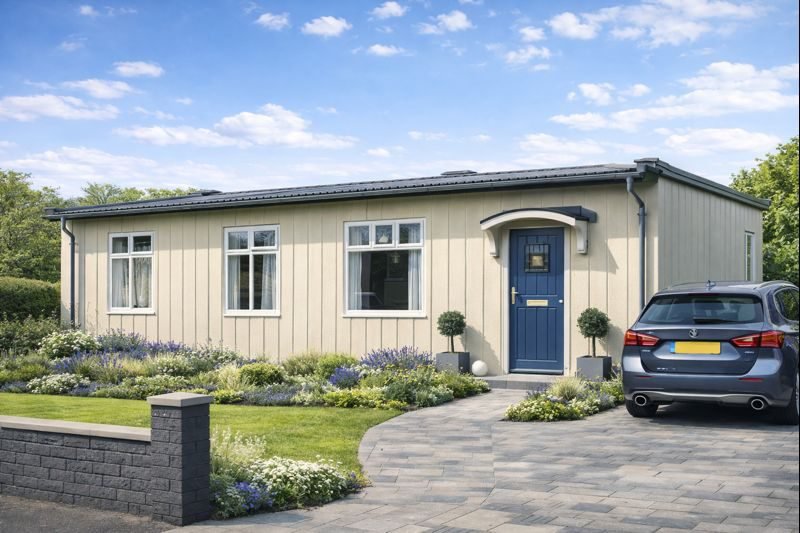
Phoenix Temporary Bungalows are detached, single-storey properties with a shallow pitch gable roof. A flat roof canopy is commonly formed over the central front entrance, which is a useful identifying feature.
External walls are formed using vertically profiled asbestos cement sheets. Internally, walls are lined with plywood fixed to timber framing, with aluminium-faced paper used within the cavity.
Roofs are timber framed and covered with profiled asbestos cement sheets, matching the external wall material. Ceilings are generally formed in fibreboard and follow the roof slope.
| Element | Typical construction | Inspection focus |
|---|---|---|
| Substructure | Concrete slab with damp-proof course | Moisture ingress, slab cracking, DPC continuity |
| Structural frame | Tubular steel portal frames and steel props | Corrosion, protective coating condition, deformation |
| External walls | Asbestos cement sheets with cavity and timber framing | Panel condition, fixings, asbestos management |
| Ground floor | Timber boarding on battens over concrete slab | Dampness, decay, floor level movement |
| Roof | Timber frame with asbestos cement sheets | Sheet condition, fixings, water ingress |
Potential hazards & inspection priorities
The most significant risk associated with Phoenix Temporary Bungalows is the presence of asbestos cement to roofs and walls. Disturbance of these materials can release harmful fibres, and their condition and management should be treated as a primary inspection priority.
Structural performance is closely linked to the condition of the steel frame. The original protective treatment is not well documented, and corrosion can occur where moisture has been present for prolonged periods.
Thermal efficiency is limited by original design standards. Insulation levels are generally poor when measured against modern expectations, and this is a common characteristic of properties of this type.
Is this house right for you?
Purchasers considering a Phoenix Temporary Bungalow should be comfortable with non-traditional construction and the management responsibilities that come with ageing prefabricated materials.
- Understanding the implications of asbestos-containing materials
- Allowing for ongoing inspection and maintenance of the steel frame
- Accepting that upgrades may be required to improve comfort and efficiency
Mortgage & resale considerations
Mortgage acceptance for Phoenix Temporary Bungalows can vary depending on lender policy, condition, and the quality of professional reporting. Non-traditional construction and asbestos presence are commonly scrutinised.
Clear survey findings, evidence of appropriate asbestos management, and an absence of unresolved structural concerns are typically influential factors in lending and resale decisions.
What a survey can — and cannot — tell you
A building survey provides an informed assessment of the visible condition and construction of a Phoenix Temporary Bungalow. Inspections are non-intrusive and limited to areas that are accessible at the time of inspection.
- Identify visible deterioration to asbestos cement roof and wall panels
- Assess signs of dampness, moisture ingress, and condensation risk
- Comment on the apparent condition of the steel frame where visible
- Review accessible floors, ceilings, and internal linings
- Highlight defects that may require repair, monitoring, or further investigation
However, there are limitations to what a survey can determine without intrusive investigation.
- Confirm the condition of concealed steel frame elements
- Assess hidden fixings or corrosion behind linings and panels
- Determine the full extent of asbestos condition within sealed areas
- Inspect areas that are inaccessible or covered at the time of inspection
Where higher-risk indicators are identified, further specialist or intrusive investigation may be recommended.
For a thorough building survey in Greater London, an instant quotation can be obtained through the online survey calculator.
Considering a Phoenix Temporary Bungalow?
A detailed building survey can help clarify construction-specific risks before committing to a purchase.
Get your instant survey quoteDisclaimer: This article is provided for general educational purposes only and is based on industry research, professional knowledge, and experience. It does not relate to any specific property and should not be relied upon when making a purchasing decision. Prospective purchasers should always commission an independent RICS-qualified surveyor to conduct a full inspection and provide a report on the actual condition of any property of interest.
