


Overview
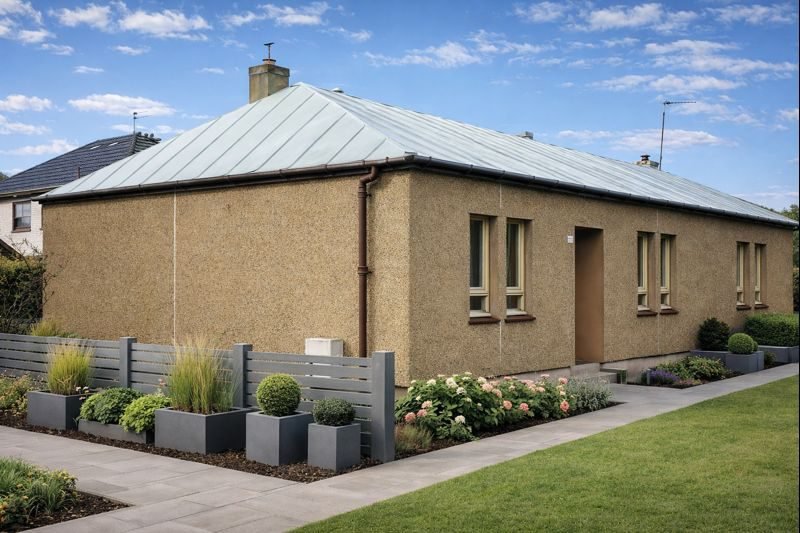
The Kelvin House is a highly unusual and exceptionally rare non-traditional bungalow type manufactured in 1926. Only two semi-detached examples are known to have been constructed, giving the type a distinct place in the history of early experimental housing in the UK. The original designer and manufacturer are not clearly recorded, which adds to the technical curiosity of these properties.
Kelvin Houses date from the inter-war period and were constructed using an early steel-framed system combined with timber infill and roughcast external finishes. Surviving examples are extremely limited in number.
Typical characteristics & construction
Kelvin Houses are single-storey, semi-detached bungalows typically located in suburban settings. They are readily identified by their shallow pitch hipped roofs clad in copper sheets, roughcast rendered elevations, and steel-framed windows set on concrete sills.
The structural form combines steel, timber, and early composite materials. This mixed construction reflects experimental building methods of the period and requires informed inspection rather than assumptions based on traditional masonry housing.
| Element | Construction | Inspection focus |
|---|---|---|
| Substructure | Concrete pads below steel stanchions with concrete strip foundations and vented underbuilding | Movement, cracking, adequacy of ventilation |
| Frame | Steel frame formed from RSA stanchions, beams, rafters and RST ceiling ties | Corrosion, section loss, previous protective treatment |
| External walls | Timber framing clad with roughcast render on mesh and lined with fibreboard | Damp penetration, timber decay, render cracking |
| Floors | Timber boarding on timber joists | Deflection, rot, moisture-related damage |
| Roof | Timber purlins on RSA clips, timber boarding, bituminous felt and copper sheets | Water ingress, fixings, corrosion to steel components |
Potential hazards & inspection priorities
The primary inspection concern is the condition of the steel framework. While inherently strong, unprotected steel of this age is vulnerable to corrosion where moisture has been present. This was a key focus during inspection of properties of this type.
Dampness is a recurring management issue. Timber framing and fibreboard linings are sensitive to prolonged moisture exposure, particularly where ventilation is restricted or roof and render defects allow water ingress.
Asbestos-containing materials are also a recognised risk given the construction period. Insulation boards, fireproofing materials and service-related components require careful assessment and, where necessary, specialist testing.
Is this house right for you?
Kelvin Houses are not conventional dwellings and require a clear understanding of non-traditional construction. Suitability depends largely on condition, previous maintenance, and the willingness to address issues associated with ageing steel and timber elements.
Mortgage & resale considerations
Lending decisions for properties of this nature are influenced by construction type, condition, and the quality of professional reporting. Clear evidence of maintenance, corrosion control, and the absence of unresolved structural defects are commonly influential factors.
What a survey can — and cannot — tell you
A building survey provides an informed assessment of the visible condition and construction of a Kelvin House. Inspections are non-intrusive and limited to areas that are accessible at the time of inspection.
- Identify visible corrosion to steel frame elements where accessible
- Assess signs of dampness, moisture ingress, and condensation risk
- Comment on roof coverings, drainage details, and external finishes
- Review the general condition of accessible floors, walls, and ceilings
- Highlight defects requiring repair, monitoring, or further investigation
However, there are limitations to what a survey can determine without intrusive investigation.
- Confirm the condition of concealed steelwork behind linings
- Assess hidden timber framing within wall and floor voids
- Determine the full extent of corrosion where elements are enclosed
- Inspect areas that are inaccessible at the time of inspection
Where higher-risk indicators are identified, further specialist or intrusive investigation may be recommended.
For a thorough building survey in Greater London, an instant quotation can be obtained through the online survey calculator.
Considering a Kelvin House?
A detailed building survey can help clarify construction-specific risks before committing to a purchase.
Get your instant survey quoteDisclaimer: This article is provided for general educational purposes only and is based on industry research, professional knowledge, and experience. It does not relate to any specific property and should not be relied upon when making a purchasing decision. Prospective purchasers should always commission an independent RICS-qualified surveyor to conduct a full inspection and provide a report on the actual condition of any property of interest.
