


Overview
The Integer House is a rare non-traditional property type developed during the 1960s, reflecting a period of experimentation with prefabricated systems and modern materials. Only a small number of these detached bungalows were constructed, giving the design a distinct place within the UK’s post-war housing stock.
Integer Houses were manufactured by Fitzpatrick & Son Ltd during the 1960s. Only 30 detached bungalows were built, making surviving examples uncommon.
Typical characteristics & construction
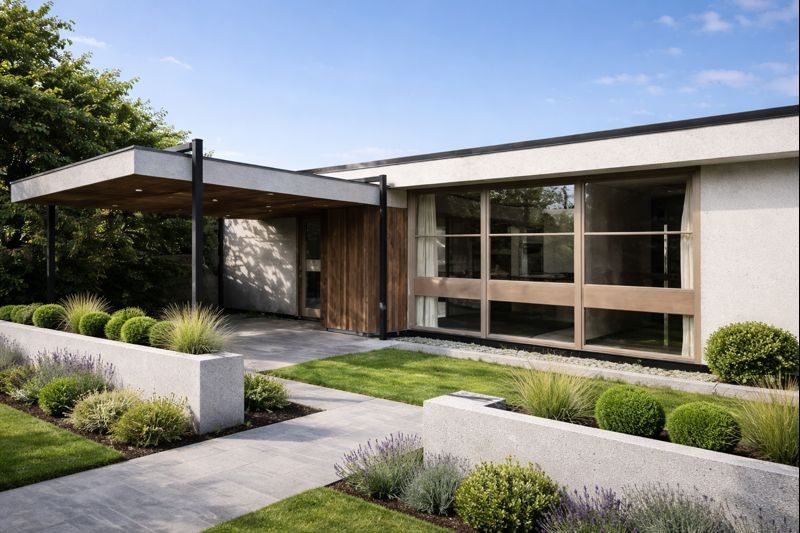
Integer Houses are detached, single-storey bungalows characterised by flat roofs with pronounced front and rear overhangs. The architectural form is distinctly modern, with extensive glazing and lightweight external wall construction.
The structural system is based around prefabricated PS panels arranged on a modular setting-out jig. Galvanised steel components form the primary structural frame, with panels connected using vertical jointing tubes.
External walls are formed from flat aluminium sheets backed by expanded polyurethane foam, a cavity, and internal plasterboard linings. Internally, partitions are also panel-based and finished with plasterboard.
| Element | Typical construction | Inspection focus |
|---|---|---|
| Substructure | Reinforced concrete slab | Cracking, movement, general stability |
| Frame | Galvanised steel PS panel system | Corrosion, joint condition, protective coating |
| External walls | Aluminium sheets with polyurethane insulation and cavity | Denting, oxidation, moisture ingress |
| Roof | Lattice steel joists with woodwool slabs | Water pooling, leaks, structural condition |
| Internal linings | Plasterboard walls and ceilings | Damp staining, distortion, fixing integrity |
Potential hazards & inspection priorities
The primary concern with Integer Houses relates to the long-term condition of the steel frame. Deterioration of the galvanised coating can lead to corrosion, particularly at joints and concealed connections.
Flat roof construction requires careful ongoing maintenance. Poor drainage or defects in the roof build-up can result in water ingress, with subsequent damage to internal finishes and insulation materials.
Large areas of glazing and lightweight wall construction can contribute to higher heat loss by modern standards, which has implications for comfort and running costs.
Is this house right for you?
Integer Houses tend to suit purchasers who understand non-traditional construction and are prepared to assess condition carefully rather than rely on assumptions based on conventional masonry housing.
- Commission a full building survey
- Review evidence of maintenance to the roof and steel frame
- Consider the implications of non-standard materials
Mortgage & resale considerations
Mortgage acceptance for non-traditional properties is influenced by construction type, condition, and the clarity of professional reporting. Lender criteria can vary and may change over time.
Clear documentation of condition, evidence of maintenance, and the absence of unresolved structural or moisture-related defects are commonly important factors.
What a survey can — and cannot — tell you
A building survey provides an informed assessment of the visible condition and construction of an Integer House. Inspections are non-intrusive and limited to areas that are accessible at the time of inspection.
- Identify visible corrosion to steel framing and panel joints
- Assess signs of dampness, moisture ingress, and condensation risk
- Comment on roof construction, drainage details, and external envelope condition
- Review the general condition of accessible floors, ceilings, and structural elements
- Highlight defects that may require repair, monitoring, or further investigation
However, there are limitations to what a survey can determine without intrusive investigation.
- Confirm the condition of concealed steelwork behind panels or linings
- Assess hidden structural connections within the panel system
- Determine the full extent of corrosion where finishes remain intact
- Inspect areas that are inaccessible or covered at the time of inspection
Where higher-risk indicators are identified, further specialist or intrusive investigation may be recommended.
For a thorough building survey in Greater London, an instant quotation can be obtained through the online survey calculator.
Considering a Integer House?
A detailed building survey can help clarify construction-specific risks before committing to a purchase.
Get your instant survey quoteDisclaimer: This article is provided for general educational purposes only and is based on industry research, professional knowledge, and experience. It does not relate to any specific property and should not be relied upon when making a purchasing decision. Prospective purchasers should always commission an independent RICS-qualified surveyor to conduct a full inspection and provide a report on the actual condition of any property of interest.
