


Overview
Wall ties are a critical component of cavity wall construction, providing the structural connection between the inner and outer masonry leaves. Their function is to ensure the two walls act together, maintaining stability and load sharing across the cavity.
In properties constructed prior to 1981, wall ties were commonly formed from mild steel. Over time, and when exposed to moisture, these ties are vulnerable to corrosion. This is a well-recognised defect in older cavity wall housing and can have serious structural consequences if left unaddressed.
Pre-1981 cavity wall properties commonly contain mild steel wall ties that are now beyond their original design life and may be susceptible to corrosion depending on exposure and construction detailing.
Typical characteristics & construction
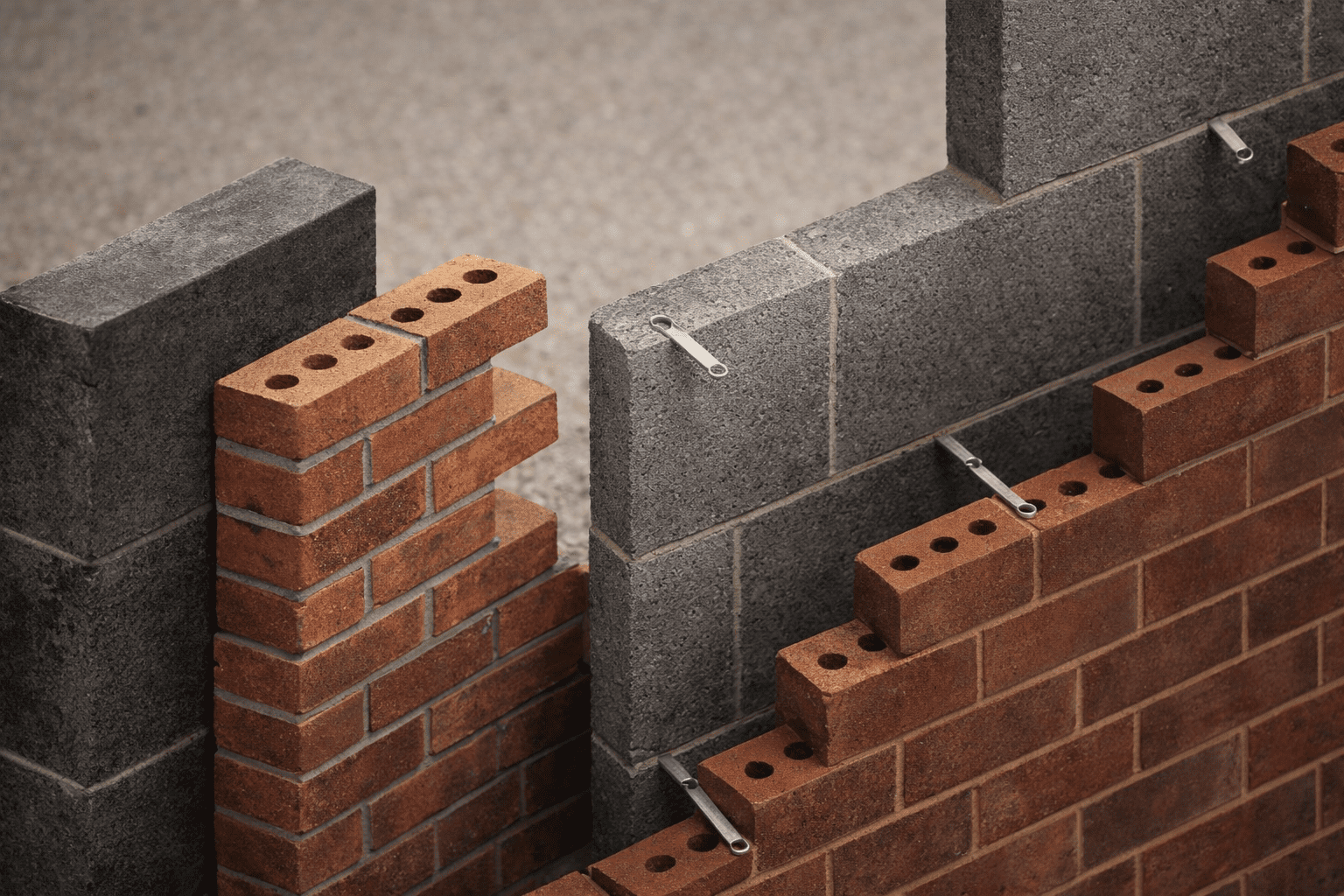
Cavity wall construction consists of two separate masonry leaves, typically brick or blockwork, separated by a cavity. Wall ties span this cavity, tying the outer leaf back to the inner structure at regular intervals.
In older properties, mild steel ties were bedded into the mortar joints without protective coatings. As moisture enters the cavity, corrosion can occur, causing the ties to expand and exert pressure on the surrounding masonry.
| Element | Typical construction | Inspection focus |
|---|---|---|
| External walls | Brick or block cavity wall | Cracking, bulging, alignment |
| Wall ties | Mild steel (pre-1981) | Corrosion, spacing, effectiveness |
| Mortar joints | Lime or cement-based mortar | Condition, erosion, moisture paths |
Potential hazards & inspection priorities
The primary hazard associated with wall tie corrosion is loss of lateral restraint between the cavity walls. As corroded ties expand, they can crack mortar joints and brickwork, leading to visible horizontal or stepped cracking.
More advanced corrosion can cause outward bulging of the external wall leaf. This was evident during inspection in many affected properties and represents a more serious structural concern requiring prompt attention.
Is this house right for you?
Cavity wall houses of this age can perform satisfactorily where wall tie condition has been properly assessed and managed. The key issue is not the construction type itself, but the condition and treatment of the ties.
- Confirm whether wall ties have been inspected or replaced
- Review evidence of past remedial works
- Allow for specialist investigation where cracking or bulging is present
Mortgage & resale considerations
Wall tie corrosion is a recognised defect that can affect mortgage lending decisions if unresolved. Lenders generally expect evidence that the issue has been properly investigated and, where necessary, remediated.
Clear survey reporting and certification of any replacement works are commonly influential factors when assessing mortgage suitability and future saleability.
What a survey can — and cannot — tell you
A building survey provides an informed assessment of the visible condition and construction of a cavity wall property. Inspections are non-intrusive and limited to areas that are accessible at the time of inspection.
- Identify cracking, bulging, and distortion associated with wall tie failure
- Assess signs of dampness and moisture ingress affecting cavity walls
- Comment on external wall condition and mortar deterioration
- Highlight defects requiring repair, monitoring, or further investigation
However, there are limitations to what a survey can determine without intrusive investigation.
- Confirm the condition of all concealed wall ties
- Assess hidden areas of the cavity wall not accessible at inspection
- Determine the full extent of corrosion without opening up works
Where higher-risk indicators are identified, further specialist or intrusive investigation may be recommended.
For a thorough building survey in Greater London, an instant quotation can be obtained through the online survey calculator.
Considering a cavity wall property?
A detailed building survey can help clarify construction-specific risks before committing to a purchase.
Get your instant survey quoteDisclaimer: This article is provided for general educational purposes only and is based on industry research, professional knowledge, and experience. It does not relate to any specific property and should not be relied upon when making a purchasing decision. Prospective purchasers should always commission an independent RICS-qualified surveyor to conduct a full inspection and provide a report on the actual condition of any property of interest.
