


Overview
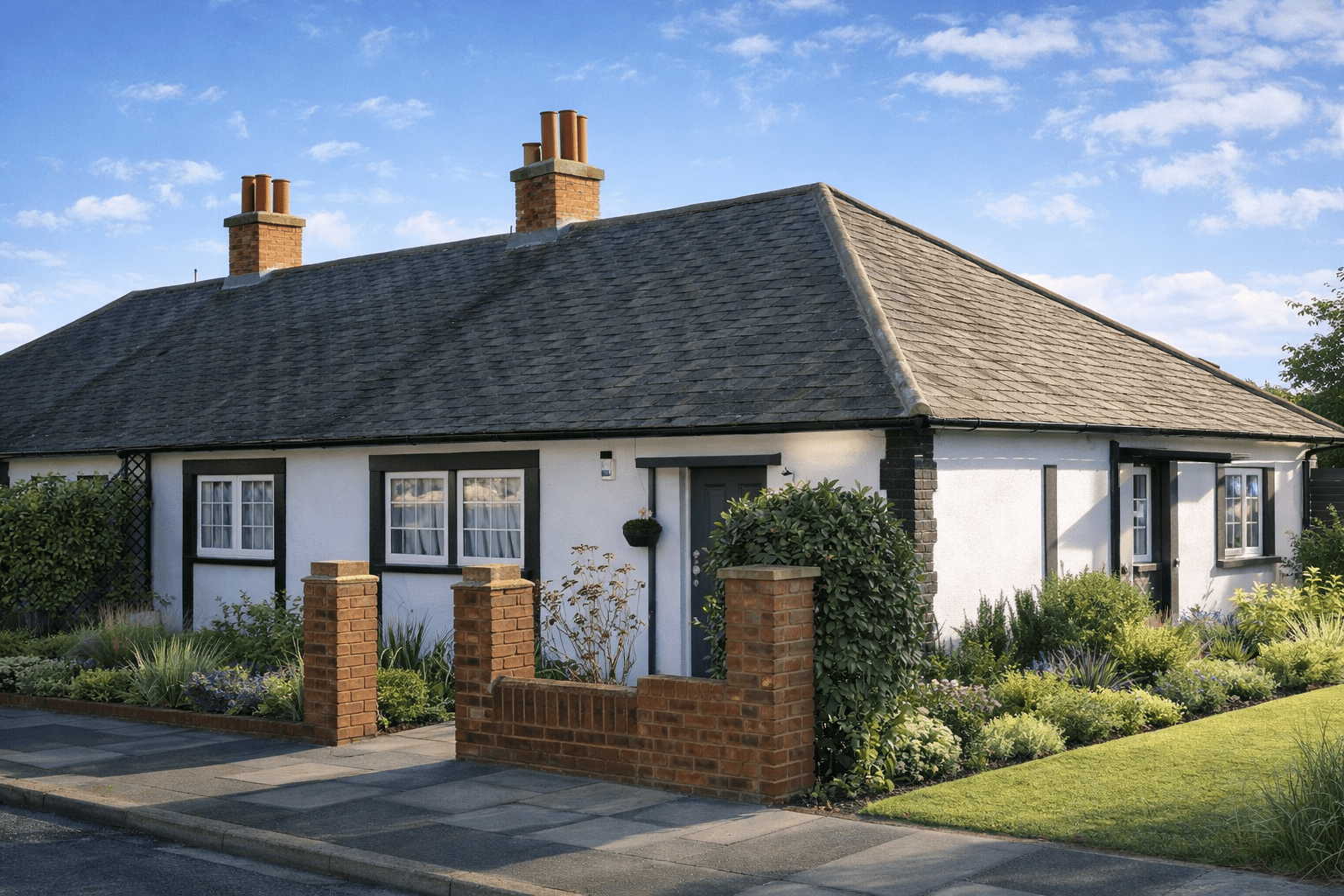
Dry Walls houses, also known as Victoria Construction Co. houses, were predominantly built in the 1920s. Designed by M Maberley-Smith and constructed by the Victoria Construction Co., they were typically developed as bungalows and two-storey semi-detached houses in suburban areas across the UK.
These properties reflect early twentieth-century concrete construction methods. Their performance today depends heavily on material durability, maintenance history, and the condition of concealed structural components.
Dry Walls houses are characterised by rendered concrete external walls formed from layered dense and clinker aggregate concrete with integral damp-proof detailing and concrete block columns providing structural support.
Typical characteristics & construction
Dry Walls houses are generally constructed on concrete strip footings with concrete under-building. External walls comprise a 3-inch dense aggregate concrete outer leaf, a bituminous sheet damp-proof membrane, and a 3-inch clinker aggregate concrete inner layer. Wall ties secure the layers, with 6-inch concrete block corner and intermediate columns providing structural support, incorporating integral damp-proof membranes and cast-in fixing ties.
Roofs are medium pitch and hipped in form, commonly covered with natural slates or asbestos cement slates. Ground floors are typically concrete. Construction details for first floors and ceilings are less clearly documented but are likely to reflect common practices of the period, including timber or concrete elements.
| Element | Typical construction | Inspection focus |
|---|---|---|
| Foundations | Concrete strip footings with concrete under-building | Settlement, cracking, movement |
| External walls | Rendered layered concrete with integral DPM and block columns | Cracking, spalling, carbonation, moisture ingress |
| Roof | Medium pitch hipped roof with natural or asbestos cement slates | Covering condition, asbestos risk, fixings, water ingress |
| Floors | Concrete ground floor; upper floors likely timber or concrete | Cracking, dampness, movement |
Potential hazards & inspection priorities
Asbestos is a significant consideration, particularly where asbestos cement slates have been used to the roof. Asbestos may also be present in other original materials. Disturbance can release fibres, creating health risks, and appropriate specialist assessment is required where suspected.
Concrete deterioration is a recognised issue in properties of this age. Cracking, spalling and carbonation can compromise durability and, in reinforced elements, long-term performance. Reference to guidance such as the Moir Report assists in assessing reinforced concrete condition where relevant.
Damp and moisture ingress can occur if the bituminous damp-proof membrane has deteriorated or been bridged. Moisture-related defects can contribute to internal mould growth, surface damage, and degradation of embedded materials.
Structural movement, including settlement or subsidence affecting concrete strip foundations, requires careful assessment. Movement patterns, cracking profiles and foundation behaviour should be considered collectively rather than in isolation.
Is this house right for you?
Dry Walls houses represent an early non-traditional concrete construction type. Purchasers should be comfortable with historic concrete systems and the need for informed assessment of ageing materials.
- Commission a comprehensive building survey
- Investigate any history of structural movement or concrete repair
- Confirm management of any asbestos-containing materials
- Review evidence of damp-proof membrane performance
Condition varies significantly between properties depending on maintenance and past alterations.
Mortgage & resale considerations
Lender confidence will depend on construction type, structural condition, and clarity of professional reporting. Evidence of concrete deterioration, unresolved structural movement, or unmanaged asbestos can influence lending decisions.
Clear documentation of inspection findings and any remedial works undertaken is often important in supporting both mortgage approval and future resale.
What a survey can — and cannot — tell you
A building survey provides an informed assessment of the visible condition and construction of a Dry Walls house. Inspections are non-intrusive and limited to areas that are accessible at the time of inspection.
- Identify visible cracking, spalling, and surface deterioration to concrete walls
- Assess signs of dampness, moisture ingress, and condensation risk
- Comment on roof coverings, drainage details, and external envelope condition
- Review the general condition of accessible floors, ceilings, and structural elements
- Highlight defects that may require repair, monitoring, or further investigation
However, there are limitations to what a survey can determine without intrusive investigation.
- Confirm the condition of concealed reinforcement within concrete elements
- Assess hidden structural components behind finishes or linings
- Determine the full extent of carbonation or internal concrete deterioration
- Inspect areas that are inaccessible or covered at the time of inspection
Where higher-risk indicators are identified, further specialist or intrusive investigation may be recommended.
For a thorough building survey in Greater London, an instant quotation can be obtained through the online survey calculator.
Considering a Dry Walls house?
A detailed building survey can help clarify construction-specific risks before committing to a purchase.
Get your instant survey quoteDisclaimer: This article is provided for general educational purposes only and is based on industry research, professional knowledge, and experience. It does not relate to any specific property and should not be relied upon when making a purchasing decision. Prospective purchasers should always commission an independent RICS-qualified surveyor to conduct a full inspection and provide a report on the actual condition of any property of interest.
