


Overview
The Dennis-Wild house is a system-built form of non-traditional housing developed during the 1920s in response to acute housing shortages across the UK. Manufactured by James Wild & Co (Housing), these properties were designed to be economical to produce while allowing rapid construction at scale.
Dennis-Wild houses were constructed in their thousands, with approximately 10,000 units built across urban and suburban areas. They are most commonly found as two-storey semi-detached or terraced dwellings.
Typical characteristics & construction
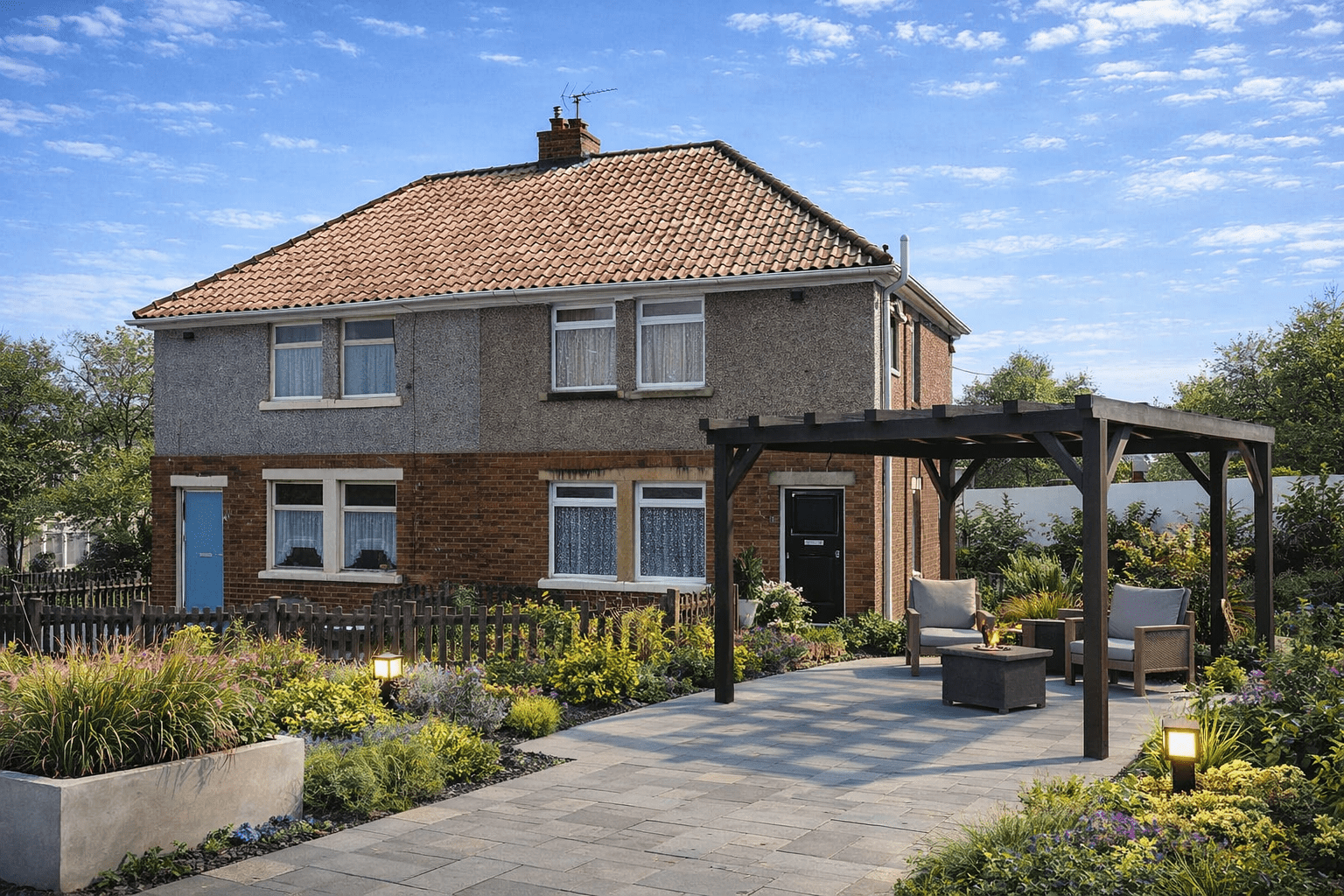
Dennis-Wild houses are usually arranged over two storeys and constructed around a steel frame system. External appearance commonly includes brickwork to the ground floor, with rendered, pebbledash, or tile-hung finishes above.
Roofs are generally hipped and of medium pitch, covered with tiles or slates. A cradle roof truss with iron tie rods is a distinctive identifying feature of this construction type.
| Element | Typical construction | Inspection focus |
|---|---|---|
| Substructure | Concrete strip footings with pads beneath steel stanchions | Settlement, presence and condition of DPC |
| Frame | Steel RSJ stanchions with RSC and RSA ties | Corrosion, particularly at stanchion bases |
| External walls | Brick and block cavity walls with timber stud upper sections | Cracking, wall tie condition, cavity width |
| Floors | T&G boarding on timber joists | Deflection, dampness, localised repairs |
| Roof | Timber rafters and purlins with cradle truss | Timber distortion, tie rod corrosion |
Potential hazards & inspection priorities
The most significant risks relate to corrosion of the steel frame, particularly RSJ stanchions where they bear onto concrete pads. This was evident during inspection of many properties of this type and can lead to loss of section and structural concern.
Other recurring issues include vertical cracking to brickwork at stanchion positions, cracking to rendered upper walls aligned with timber studs, and defects associated with inadequate or corroded wall ties.
Is this house right for you?
Dennis-Wild houses can perform satisfactorily where the steel frame and envelope have been properly maintained. However, they are less forgiving of neglect and benefit from informed ownership and periodic professional inspection.
Mortgage & resale considerations
Mortgage acceptance for Dennis-Wild houses is influenced by construction type, condition, and the clarity of survey reporting. Evidence of untreated corrosion, unresolved cracking, or damp-related defects can affect lending decisions.
What a survey can — and cannot — tell you
A building survey provides an informed assessment of the visible condition and construction of a Dennis-Wild house. Inspections are non-intrusive and limited to areas that are accessible at the time of inspection.
- Identify visible corrosion to steel stanchions and associated cracking
- Assess signs of dampness, rising moisture, and condensation risk
- Comment on roof coverings, drainage, and external envelope condition
- Review the condition of accessible floors, ceilings, and timber elements
- Highlight defects requiring repair, monitoring, or further investigation
However, there are limitations to what a survey can determine without intrusive investigation.
- Confirm the internal condition of concealed steelwork
- Assess hidden wall ties or elements behind finishes
- Inspect areas that are inaccessible or covered at the time of inspection
Where higher-risk indicators are identified, further specialist or intrusive investigation may be recommended.
For a thorough building survey in Greater London, an instant quotation can be obtained through the online survey calculator.
Considering a Dennis-Wild house?
A detailed building survey can help clarify construction-specific risks before committing to a purchase.
Get your instant survey quoteDisclaimer: This article is provided for general educational purposes only and is based on industry research, professional knowledge, and experience. It does not relate to any specific property and should not be relied upon when making a purchasing decision. Prospective purchasers should always commission an independent RICS-qualified surveyor to conduct a full inspection and provide a report on the actual condition of any property of interest.
