


Overview
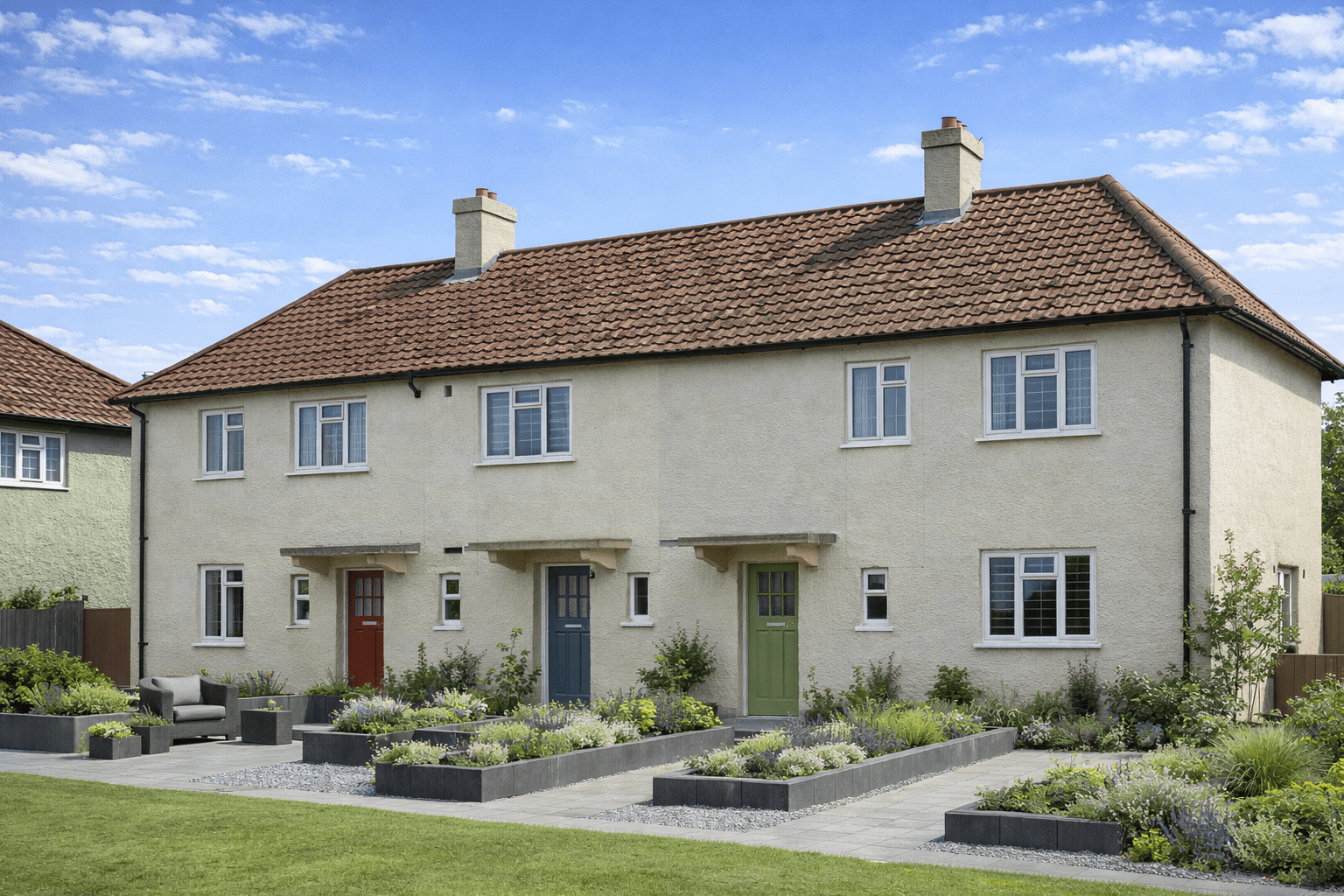
The Corolite house is a system-built property manufactured by Corolite Construction Co. Ltd between 1923 and 1927. It was developed during a period of significant housing shortage in the UK and formed part of an early attempt to deliver housing quickly using non-traditional construction methods.
Approximately 700 Corolite properties were built, primarily as two-storey terraced houses. The design is also referred to as a “No-Fines” house due to its clinker aggregate no-fines concrete construction.
Corolite houses were constructed using clinker aggregate no-fines reinforced concrete for the external and separating walls, with reinforced concrete first floor slabs in many variants. They are predominantly two-storey terraced dwellings dating from the interwar period.
Typical characteristics & construction
Corolite houses are generally two-storey terraced properties with medium pitch hipped roofs. Roof coverings are commonly concrete tiles or slates, although some variants incorporate flat roofs finished with bitumen.
The substructure comprises clinker aggregate concrete strip footings and pads. External walls are formed from approximately 8-inch clinker aggregate no-fines reinforced concrete, with additional reinforcement over window and door openings. Separating walls between properties are also constructed from 8-inch clinker aggregate no-fines concrete.
Ground floors typically consist of timber boarding on timber joists supported by timber bearers on clinker aggregate concrete pads. First floors are commonly formed from timber boarding laid over a 6.5-inch clinker aggregate reinforced concrete slab, although some variants use a 3-inch clinker aggregate reinforced concrete slab. Detailed information regarding ceiling construction is limited.
| Element | Typical construction | Inspection focus |
|---|---|---|
| Substructure | Clinker aggregate concrete strip footings and pads | Settlement, cracking, signs of movement |
| External walls | 8-inch clinker aggregate no-fines reinforced concrete, rendered | Cracking, shrinkage, corrosion around openings |
| Separating walls | 8-inch clinker aggregate no-fines concrete | Cracking, movement affecting adjoining properties |
| Ground floor | Timber boarding on joists and bearers | Instability, rot, timber condition |
| First floor | Clinker aggregate reinforced concrete slab (6.5-inch or 3-inch variants) | Deflection, cracking, signs of reinforcement corrosion |
| Roof | Timber rafters with concrete tiles or slates; some flat bitumen roofs | Covering condition, timber integrity, water ingress |
Potential hazards & inspection priorities
One of the primary concerns in Corolite houses is the potential presence of unstable fractions of unburnt coal within the clinker aggregate. This can contribute to cracking and shrinkage of the no-fines reinforced concrete external walls over time.
Corrosion of reinforcement within the external walls and first floor slabs is another significant risk. Where corrosion is advanced, this can result in cracking, loss of section to reinforcement and, in some cases, gross deflection of first floor slabs.
Although Corolite houses are not specifically classed as defective under the Defective Premises Act, the structural issues associated with material performance can necessitate extensive repairs where deterioration is present.
Is this house right for you?
A Corolite house requires a purchaser who understands non-traditional reinforced concrete construction and is prepared to assess the property on the basis of its individual condition.
- Arrange a full building survey with specific attention to concrete condition
- Assess any history of structural repair or slab strengthening
- Consider the implications of reinforced concrete deterioration over the long term
Particular caution is warranted where there is visible cracking, evidence of slab deflection or signs of previous structural intervention.
Mortgage & resale considerations
Mortgage lending decisions on Corolite houses are influenced by construction type, condition and the clarity of professional reporting. Acceptance criteria vary between lenders and may change over time.
Evidence of structural stability, absence of significant slab deflection, and documented repair works where relevant are commonly material factors in lending and resale discussions.
What a survey can — and cannot — tell you
A building survey provides an informed assessment of the visible condition and construction of a Wimpey No-Fines house. Inspections are non-intrusive and limited to areas that are accessible at the time of inspection.
- Identify visible cracking to no-fines concrete walls and associated render
- Assess signs of dampness, moisture ingress, and condensation risk
- Comment on roof coverings, drainage details, and external envelope condition
- Review the general condition of accessible floors, ceilings, and structural elements
- Highlight defects that may require repair, monitoring, or further investigation
However, there are limitations to what a survey can determine without intrusive investigation.
- Confirm the condition of concealed reinforcement within no-fines concrete
- Assess hidden structural elements behind finishes or linings
- Determine the full extent of carbonation or internal concrete deterioration
- Inspect areas that are inaccessible or covered at the time of inspection
Where higher-risk indicators are identified, further specialist or intrusive investigation may be recommended.
For a thorough building survey in Greater London, an instant quotation can be obtained through the online survey calculator.
Considering a Corolite house?
A detailed building survey can help clarify construction-specific risks before committing to a purchase.
Get your instant survey quoteDisclaimer: This article is provided for general educational purposes only and is based on industry research, professional knowledge, and experience. It does not relate to any specific property and should not be relied upon when making a purchasing decision. Prospective purchasers should always commission an independent RICS-qualified surveyor to conduct a full inspection and provide a report on the actual condition of any property of interest.
