


Overview
The Conatus house is a distinct form of non-traditional housing introduced into the UK from 1974 onwards. Manufactured by Conatus Industries Ltd, these properties form part of a period of post-war innovation aimed at delivering durable, repeatable housing solutions. The design and construction approach sets them apart from traditional masonry dwellings.
Conatus houses were predominantly constructed as detached bungalows and are most commonly found in suburban locations. Their form, materials, and structural system differ markedly from traditional brick-built housing.
Typical characteristics & construction
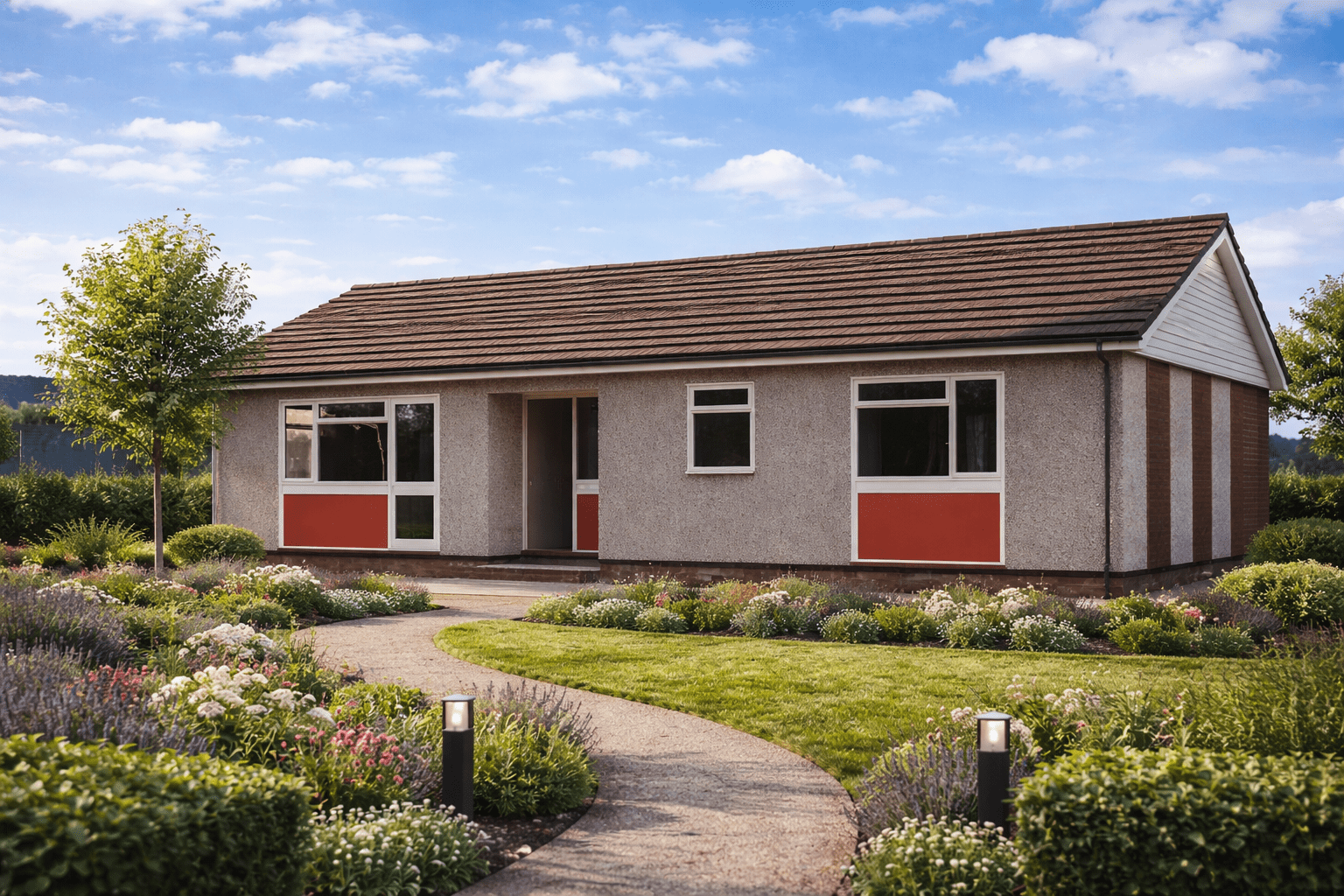
Conatus houses are generally single-storey detached dwellings. They are visually identified by medium pitch gable roofs finished with interlocking concrete tiles and roughcast-rendered external walls extending to eaves level. Horizontal timber or plastic boarding is commonly present at the gable apex.
Structurally, the houses rely on a steel-framed system rather than traditional loadbearing masonry. Floors and roof structures incorporate timber elements supported by the main steel frame.
| Element | Typical construction | Inspection focus |
|---|---|---|
| Substructure | Concrete base | Settlement, cracking, overall stability |
| External walls | Steel-framed composite panels with rendered finish | Corrosion, cracking, panel condition |
| Roof | Timber trussed rafters with interlocking concrete tiles | Tile displacement, timber condition, weathering |
| Floors | Concrete or tongue-and-groove boarding on timber joists | Moisture, deflection, timber decay |
| Main frame | Steel structural frame | Corrosion, moisture exposure, junction details |
Potential hazards & inspection priorities
The primary inspection concern with Conatus houses relates to the condition of the steel components. Corrosion can develop where moisture is present, particularly around wall panels, openings, and concealed junctions.
Roof coverings should be checked for displaced or damaged concrete tiles, as failure at roof level can allow water ingress that accelerates deterioration elsewhere. Timber elements within the roof and floors are also vulnerable if moisture levels are elevated.
Although Conatus houses are not designated as defective under the Defective Premises Act, their non-traditional form means condition and maintenance history carry particular importance.
Is this house right for you?
A Conatus house may be appropriate for purchasers who understand non-traditional construction and are prepared to base decisions on the specific condition of the individual property.
- Commission a full building survey
- Review evidence of ongoing maintenance
- Pay close attention to steel and moisture-related risks
Mortgage & resale considerations
Lending and resale considerations for Conatus houses are influenced by construction type and condition. Requirements can vary between lenders and may change over time.
Clear survey reporting, evidence of repair, and the absence of significant unresolved defects are commonly influential factors.
What a survey can — and cannot — tell you
A building survey provides an informed assessment of the visible condition and construction of a Conatus house. Inspections are non-intrusive and limited to areas that are accessible at the time of inspection.
- Identify visible corrosion or deterioration to steel frame components
- Assess signs of dampness, moisture ingress, and condensation risk
- Comment on roof coverings, drainage details, and external envelope condition
- Review the general condition of accessible floors, ceilings, and structural elements
- Highlight defects that may require repair, monitoring, or further investigation
However, there are limitations to what a survey can determine without intrusive investigation.
- Confirm the condition of concealed steel elements within wall panels
- Assess hidden structural components behind finishes or linings
- Determine the full extent of corrosion where access is restricted
- Inspect areas that are inaccessible or covered at the time of inspection
Where higher-risk indicators are identified, further specialist or intrusive investigation may be recommended.
For a thorough building survey in Greater London, an instant quotation can be obtained through the online survey calculator.
Considering a Conatus house?
A detailed building survey can help clarify construction-specific risks before committing to a purchase.
Get your instant survey quoteDisclaimer: This article is provided for general educational purposes only and is based on industry research, professional knowledge, and experience. It does not relate to any specific property and should not be relied upon when making a purchasing decision. Prospective purchasers should always commission an independent RICS-qualified surveyor to conduct a full inspection and provide a report on the actual condition of any property of interest.
