


Overview
The Atholl 1951 house is a post-war, non-traditional dwelling manufactured by Atholl Steel Houses Ltd between 1951 and 1955. Approximately 1,200 units were constructed as part of a wider national response to acute housing shortages following the Second World War.
These properties are found across a range of urban and suburban locations and were designed to provide durable, cost-effective family accommodation using a steel-framed system combined with more conventional masonry elements.
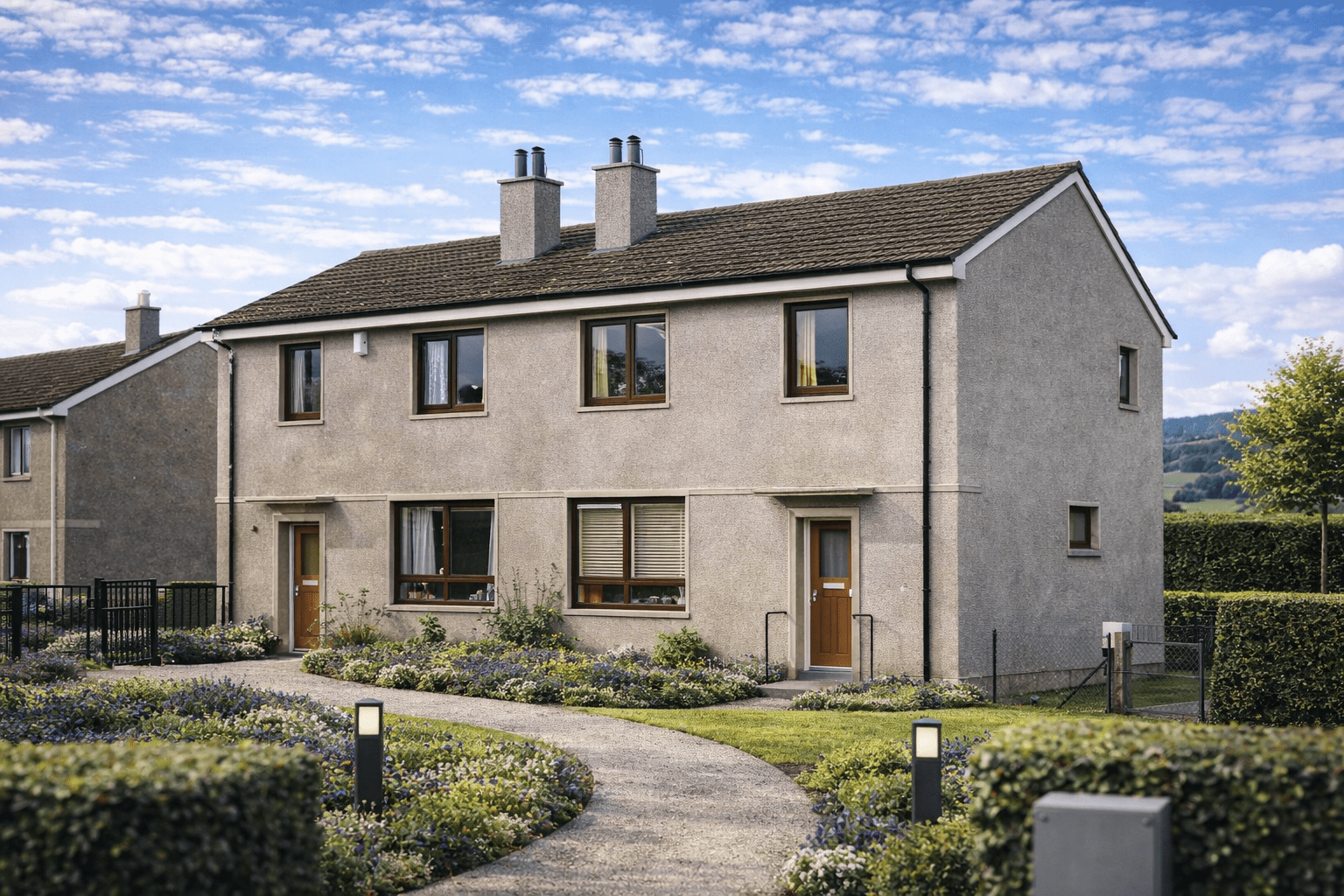
Atholl 1951 houses are two-storey dwellings constructed in detached, semi-detached, and terraced forms, using a steel structural frame with rendered external walls and tiled pitched roofs.
Typical characteristics & construction
Atholl houses are typically two-storey in form, with medium-pitch gable roofs finished in tiles. External walls are rendered with a roughcast finish, often incorporating a pronounced bell mouth detail at first-floor level on the front elevation.
The structural system is based around a steel frame, with brickwork and timber elements used to form the external envelope and internal layout. Projecting surrounds to doors and windows are common, and some examples incorporate a flat concrete canopy over the main entrance.
| Element | Typical construction | Inspection focus |
|---|---|---|
| Substructure | Concrete pads and strip footings with brick underbuilding and DPC | Settlement, damp transfer, condition of brickwork |
| Main frame | Steel stanchions, beams, ties, and roof trusses | Corrosion, moisture exposure, structural integrity |
| External walls | Rendered roughcast brick with cavity and internal timber framing | Cracking, dampness, render condition |
| Floors | Concrete ground floor, timber joisted first floor with T&G boarding | Levelness, movement, moisture-related defects |
| Roof | Timber purlins and sarking with felt and tiles | Tile condition, felt deterioration, water ingress |
Potential hazards & inspection priorities
The most significant risk associated with Atholl houses is corrosion of the steel frame. Where moisture is able to reach steel stanchions, beams, or ties, progressive rusting can occur and may not be immediately visible.
Damp and moisture ingress are also common considerations, particularly given the age of the original damp-proof course and the presence of cavity construction combined with timber framing. Inadequate insulation by modern standards can contribute to condensation risk.
As with many mid-20th-century properties, the potential presence of asbestos-containing materials should be considered, even where no obvious indicators are present.
Is this house right for you?
An Atholl 1951 house can provide solid accommodation, but purchasers should be comfortable with non-traditional construction and the need for informed assessment.
- Commission a full building survey before purchase
- Pay close attention to evidence of dampness and steel corrosion
- Factor in upgrading insulation and services where original
Mortgage & resale considerations
Mortgage acceptance for steel-framed, non-traditional houses can vary depending on lender policy, property condition, and the quality of professional reporting.
Clear survey findings, evidence of maintenance, and the absence of unresolved structural concerns are commonly influential in lending and resale decisions.
What a survey can — and cannot — tell you
A building survey provides an informed assessment of the visible condition and construction of an Atholl 1951 house. Inspections are non-intrusive and limited to areas that are accessible at the time of inspection.
- Identify visible corrosion to exposed steel elements
- Assess signs of dampness, moisture ingress, and condensation risk
- Comment on roof coverings, drainage details, and external envelope condition
- Review the general condition of accessible floors, ceilings, and partitions
- Highlight defects that may require repair, monitoring, or further investigation
However, there are limitations to what a survey can determine without intrusive investigation.
- Confirm the condition of concealed steel within walls or floors
- Assess hidden structural elements behind finishes
- Determine the full extent of internal corrosion where not visible
- Inspect areas that are inaccessible at the time of inspection
Where higher-risk indicators are identified, further specialist or intrusive investigation may be recommended.
For a thorough building survey in Greater London, an instant quotation can be obtained through the online survey calculator.
Considering an Atholl 1951 house?
A detailed building survey can help clarify construction-specific risks before committing to a purchase.
Get your instant survey quoteDisclaimer: This article is provided for general educational purposes only and is based on industry research, professional knowledge, and experience. It does not relate to any specific property and should not be relied upon when making a purchasing decision. Prospective purchasers should always commission an independent RICS-qualified surveyor to conduct a full inspection and provide a report on the actual condition of any property of interest.
