


Overview
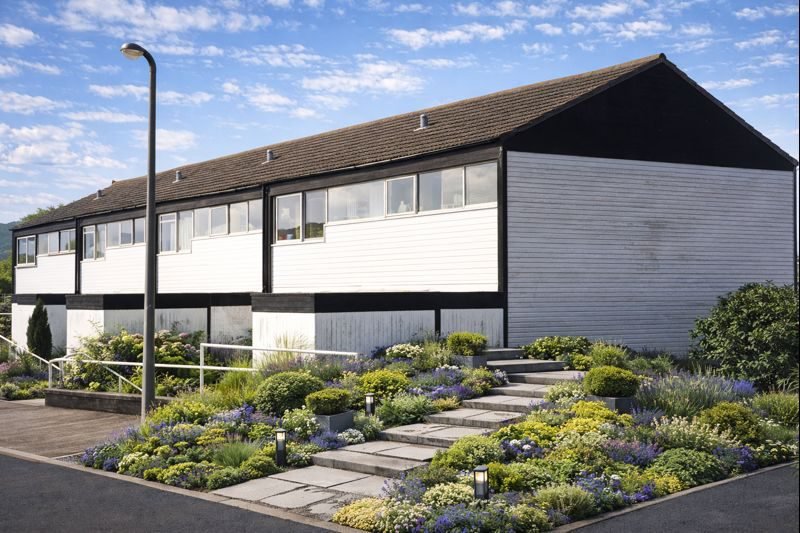
The AGB Modular 6 house dates from the mid-1960s and represents a short-lived but distinctive form of British modular housing. Manufactured in 1965, this system was developed by Modular New Homes Ltd in collaboration with A.G.B G Group and Dudley Coles Ltd, with design input from G R Vaughan Ellis and Brian L Godfrey.
Only around 50 units were constructed. Surviving examples are therefore rare and are usually encountered as bungalows or two-storey terraced houses.
AGB Modular 6 houses are steel-framed, non-traditional properties dating from 1965. Their rarity and construction form mean condition and detailing vary significantly between examples.
Typical characteristics & construction
AGB Modular 6 houses are formed around a steel structural frame with timber infill panels. External appearance varies depending on cladding type and later alterations, but original detailing is often still identifiable.
Roofs are either medium-pitch gable roofs covered with interlocking concrete tiles or flat roofs finished with bituminous felt. Internally, partitions are timber stud construction with plasterboard linings, and insulation standards reflect the period of construction.
| Element | Typical construction | Inspection focus |
|---|---|---|
| Substructure | Concrete pads to stanchions with perimeter-thickened slab and DPC | Movement, cracking, damp transfer at slab edges |
| Frame | Steel stanchions, beams and ties with zinc paint protection | Corrosion, coating failure, moisture exposure |
| External walls | Timber infill panels with steel sheet, asbestos cement, plastic boarding or tile hanging | Fixings, corrosion, deterioration of cladding panels |
| Floors | Concrete ground floor; timber joists and chipboard at first floor | Deflection, dampness, localised decay |
| Roof | Timber trusses with felt and concrete tiles or flat felt covering | Weathering, water ingress, insulation condition |
Potential hazards & inspection priorities
The most significant risk associated with AGB Modular 6 houses is corrosion of the steel frame. Moderate corrosion is a common finding, particularly where protective coatings have deteriorated or moisture control has been poor.
Asbestos cement sheets were used in parts of the external envelope and, in some variants, within roof spaces. The condition and location of asbestos-containing materials require careful assessment due to the health implications if disturbed.
Age-related deterioration of timber infill panels, moisture ingress through cladding junctions, and limited insulation performance are also frequent considerations during inspection.
Is this house right for you?
AGB Modular 6 houses are uncommon and require an understanding of non-traditional construction. Suitability depends heavily on current condition, maintenance history, and the quality of previous repairs.
- Commission a full building survey by a surveyor experienced with steel-framed housing
- Establish the presence and condition of any asbestos-containing materials
- Review evidence of corrosion protection and past remedial works
Mortgage & resale considerations
Mortgage acceptance for steel-framed modular houses varies between lenders and is influenced by condition, documentation, and professional reporting. Clear identification of the construction type and any remedial works is essential.
Properties with unmanaged corrosion or unresolved defects may face lending restrictions.
What a survey can — and cannot — tell you
A building survey provides an informed assessment of the visible condition and construction of an AGB Modular 6 house. Inspections are non-intrusive and limited to areas that are accessible at the time of inspection.
- Identify visible corrosion to steel frame elements
- Assess the condition of external cladding and timber infill panels
- Comment on roof coverings, drainage details, and weather tightness
- Review accessible floors, ceilings, and internal linings
- Highlight defects requiring repair, monitoring, or further investigation
However, there are limitations to what a survey can determine without intrusive investigation.
- Confirm the condition of concealed steel connections or fixings
- Assess hidden frame elements behind finishes or linings
- Determine the full extent of corrosion beneath protective coatings
- Inspect inaccessible or enclosed areas
Where higher-risk indicators are identified, further specialist or intrusive investigation may be recommended.
For a thorough building survey in Greater London, an instant quotation can be obtained through the online survey calculator.
Considering a AGB Modular 6 house?
A detailed building survey can help clarify construction-specific risks before committing to a purchase.
Get your instant survey quoteDisclaimer: This article is provided for general educational purposes only and is based on industry research, professional knowledge, and experience. It does not relate to any specific property and should not be relied upon when making a purchasing decision. Prospective purchasers should always commission an independent RICS-qualified surveyor to conduct a full inspection and provide a report on the actual condition of any property of interest.
