

DRONE ROOF SURVEY

Key Features
Typical Survey Photographs


The Roof Survey (Drone Survey)
Using a drone, this Roof Survey gives you a concise review of the roof condition; a Roof Survey is a stand-alone roof inspection report performed using a drone.
Is a roof survey right for me?
A Roof Report will provide you with assurance, especially when you’re not anticipating substantial roofing issues. A Roof Survey is ideal for roofs that cannot be inspected from ground level or require a detailed inspection to ascertain the condition of the components.
What will the roof survey give me?
This specialized service is designed to give you a detailed understanding of the status of the roofing on any property you’re considering, whether it’s for purchasing or leasing.
A roof plays a vital role in maintaining the integrity of a building. It shields the interiors from weather elements, contributes to energy efficiency, and significantly impacts the overall property value. But how can you be sure of the roof’s condition? That’s where our Roof Survey comes in.
At Flettons, our Roof Survey provides a comprehensive analysis of the current state of a roof. We deploy cutting-edge drone technology for the inspection to ensure an unbiased, accurate, and thorough examination. With a bird’s-eye view, our drones capture high-resolution images that enable us to identify any signs of wear and tear, potential leaks, or other structural issues that may need immediate attention or could pose problems in the future.
Leaseholders, in particular, find our Roof Survey invaluable. In many lease agreements, the leaseholder can be hit with substantial unexpected charges due to roof damage or deterioration. With our Roof Survey, you can avoid these surprise expenses. You’ll be armed with a detailed account of the roof’s condition before signing any agreement, enabling you to negotiate repairs or better terms, thus avoiding the burden of excessive costs related to faulty roofs.
What will the report give me?
Working to strict RICS standards, we carry out desk research plus a detailed visual inspection of every accessible area. We also suggest potential hidden defects in areas that might not be fully inspected (such as certain types of underground drainage systems).
What will my report look like?
You’ll find our reports easy to understand. We avoid complex surveyor-speak, choosing plain English instead. Plus, we’re always at the end of the phone for your final queries.
As it’s an overview, this is the quickest report for us to create. Having visited the property, we provide your report via email within 7 to 10 working days. You’ll want answers fast, so we work as quickly as possible.
Where can you not perform a a roof survey?
Regrettably, there are specific areas where we cannot conduct this survey due to No-fly zone (NFZ) regulations imposed by the Civil Aviation Authority (CAA). This includes central London’s Hyde Park NFZ and areas near airports. If you’re uncertain about whether your location falls within an NFZ, please reach out to us at 0330 043 4650 to discuss your needs.
The sample RICS building survey gives an example of the general layout of the roof report.
*The sample report will be automatically downloaded onto your device.
Need something else? Check out our other RICS Surveys.


Useful Articles
-
The Wellbuilt House: A Comprehensive Guide for UK Home Buyers and Investors
Understanding the Wellbuilt House The Wellbuilt house, a distinctive property type in the UK, offers a unique blend of architectural design and historical significance. Constructed primarily between 1967 and the 1970s, these homes were the brainchild… -
Unveiling the Weir Prewar House: A Comprehensive Guide for Home Buyers and Investors
Understanding the Weir Prewar House The Weir Prewar house, a distinctive architectural style, holds a unique place in the history of British housing. Constructed between 1925 and 1927, these homes were the brainchild of G &… -
Unveiling the Weir Postwar House: A Comprehensive Guide for Home Buyers and Investors
Understanding the Weir Postwar House The Weir Postwar house, a notable example of system-built properties in the UK, represents a significant chapter in the history of British housing. Constructed between 1952 and 1956, these homes were… -
The Wates House
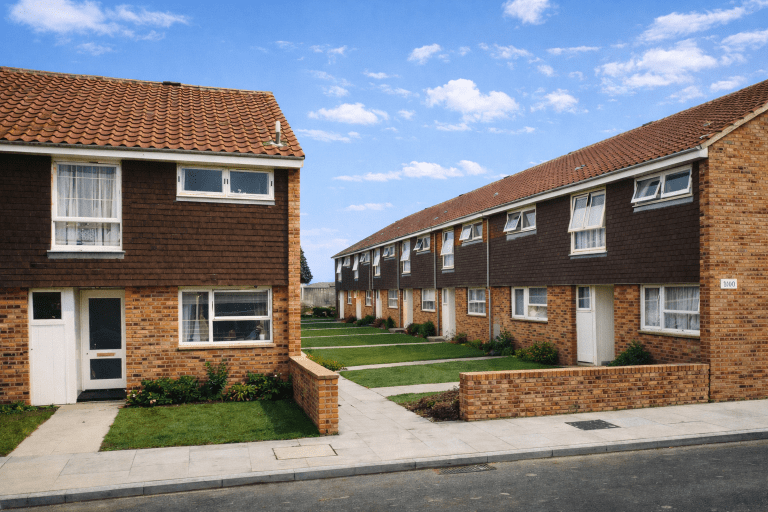
The Wates house is a system-built form of UK housing constructed between 1969 and 1976 to address post-war housing demand. Built using a platform timber frame with brick cladding and areas of tile hanging, these two-storey semi-detached and terraced homes are commonly found in urban and suburban settings. While not classified as defective, their construction requires careful inspection, particularly in relation to moisture control, timber condition, insulation, and ageing roof materials. -
The USA Temporary Bungalow House
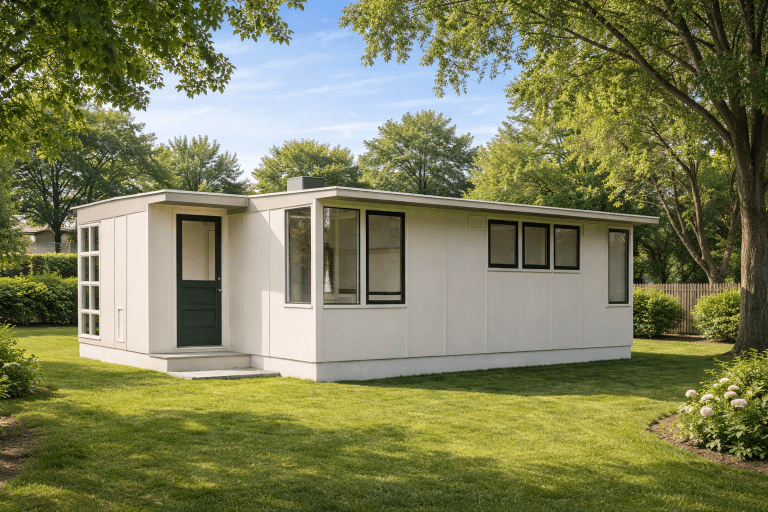
The USA Temporary Bungalow House is a rare form of post-war prefabricated housing developed in the 1940s to address acute housing shortages. Built using lightweight timber framing, fibreboard cladding, and flat felt roofs, these single-storey bungalows were intended as temporary solutions but many remain in use today. While historically significant, their non-traditional construction and ageing materials mean careful inspection and informed assessment are essential before purchase. -
Unit System 67 Houses
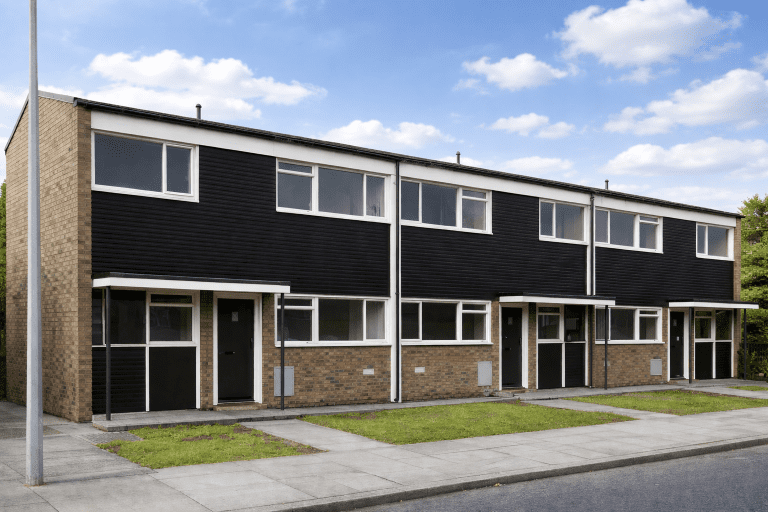
A Unit System 67 house is a non-traditional, timber-framed property built between 1967 and 1971 as part of the post-war housing programme. Understanding its construction, materials, and potential risks is essential when assessing condition, maintenance needs, and suitability for purchase.