

LEVEL 3 SURVEY

Key Features
The Level 3 Survey (Building Survey)
Whether your property is old or new, choosing our Level 3 Survey is a level three survey service that provides the most in-depth inspection, ensuring your investment is justified.
You’re making the biggest purchase in your life. Knowing exactly what you’re buying avoids expensive surprises.
Our Building Survey (level 3) suits both new and old property types. We always recommend it for older homes as they’re more likely to have defects to put right and, in many cases, structural changes.
The level three survey is much more detailed than the RICS Homebuyers Survey level 2, and looks at more than just the condition; it delves deeper into the material used, performance characteristics, future repair and maintenance, and feasibility assessments for extending the building. However, a newer house can also present problems that must be fixed, and this report provides ample advice.
A Building Survey is also ideal if you intend to alter or extend your new home. For example, we assess the loft construction, should you be looking to convert it. So. you’ll understand exactly what you’re buying.
What will the report give me?
Working to strict RICS standards, we carry out desk research plus a detailed visual inspection of every accessible area. We also suggest potential hidden defects in areas that might not be fully inspected (such as certain types of underground drainage systems).
Many people reference their Building Survey report for years after moving in. It tells you exactly what to focus on to improve your home.
Working to get you answers swiftly, we arrange a property visit once you instruct us.
You’ll receive an email summary of that inspection within 48 hours too. And you can always contact your surveyor directly. There’s no need to be worried about unanswered questions.
Extra Add-on Available
For an additional fee, you can choose individual add-ons to bolt on to your standard level 3 survey or opt for a level 3+ and save £150:
The sample RICS building survey gives an example of the general layout of the level 2 and 3 surveys. Get the level 3 PLUS package and get a reinstatement valuation, summary of repair costs, and aerial images.
*The sample report will be automatically downloaded onto your device.
How long will the Building Survey take?
With the most comprehensive survey available, we take more time for our property inspection and creating your report. Expect to receive your Building Survey report in an estimated 10-14 working days.
We’ll also email you within 48 hours of our inspection to ensure you have a summary of the findings to hand. We know having the facts is important at such a stressful time.
What will a Building Survey (level 3) cost?
RICS Building Survey reports start at £750 (including VAT), subject to the property value, structure, and configuration.
Simply complete our form below, and we’ll give you an instant quote based on the building you’d like us to survey.
Need something else? Check out our other RICS Surveys.


Useful Articles
-
The Wellbuilt House: A Comprehensive Guide for UK Home Buyers and Investors
Understanding the Wellbuilt House The Wellbuilt house, a distinctive property type in the UK, offers a unique blend of architectural design and historical significance. Constructed primarily between 1967 and the 1970s, these homes were the brainchild… -
Unveiling the Weir Prewar House: A Comprehensive Guide for Home Buyers and Investors
Understanding the Weir Prewar House The Weir Prewar house, a distinctive architectural style, holds a unique place in the history of British housing. Constructed between 1925 and 1927, these homes were the brainchild of G &… -
Unveiling the Weir Postwar House: A Comprehensive Guide for Home Buyers and Investors
Understanding the Weir Postwar House The Weir Postwar house, a notable example of system-built properties in the UK, represents a significant chapter in the history of British housing. Constructed between 1952 and 1956, these homes were… -
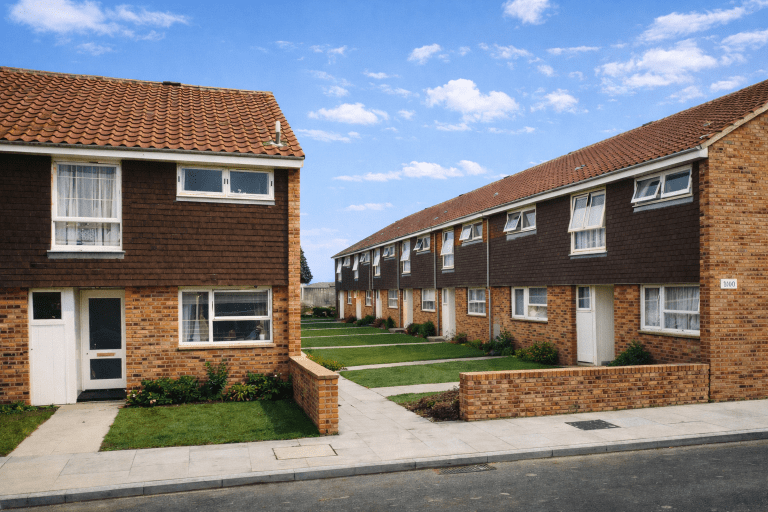
The Wates House
The Wates house is a system-built form of UK housing constructed between 1969 and 1976 to address post-war housing demand. Built using a platform timber frame with brick cladding and areas of tile hanging, these two-storey semi-detached and terraced homes are commonly found in urban and suburban settings. While not classified as defective, their construction requires careful inspection, particularly in relation to moisture control, timber condition, insulation, and ageing roof materials. -
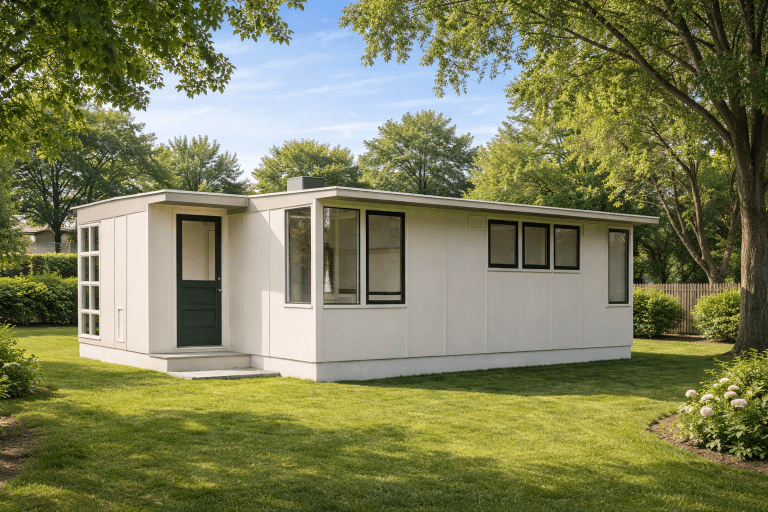
The USA Temporary Bungalow House
The USA Temporary Bungalow House is a rare form of post-war prefabricated housing developed in the 1940s to address acute housing shortages. Built using lightweight timber framing, fibreboard cladding, and flat felt roofs, these single-storey bungalows were intended as temporary solutions but many remain in use today. While historically significant, their non-traditional construction and ageing materials mean careful inspection and informed assessment are essential before purchase. -
Unit System 67 Houses
A Unit System 67 house is a non-traditional, timber-framed property built between 1967 and 1971 as part of the post-war housing programme. Understanding its construction, materials, and potential risks is essential when assessing condition, maintenance needs, and suitability for purchase.