


Overview
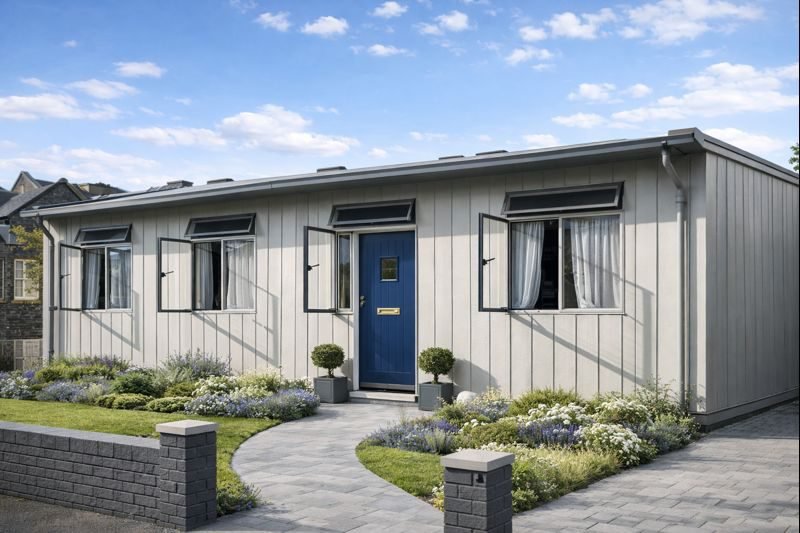
The Portal Temporary Bungalow, also referred to as the MOW Emergency or Prefab, is a rare example of post-war non-traditional housing in the UK. Designed in 1944 as a rapid response to severe housing shortages, it reflects the urgency and innovation of the period.
Although intended as a temporary measure, the design and construction methods used provide valuable insight into mid-20th-century prefabricated housing solutions.
Portal Temporary Bungalows were designed by A.W. Kenyon and C.J. Mole and manufactured by Briggs Motor Bodies and Pressed Steel Co. Only a single example was produced, making this construction type exceptionally uncommon.
Typical characteristics & construction
Portal Temporary Bungalows are detached, single-storey dwellings with a shallow pitch gable roof. Roof coverings consist of profiled steel sheets finished with a tar and sand coating. External walls are similarly clad in profiled steel sheets with a sanded paint finish.
A flat roof extension is commonly formed on the gable wall, providing an entrance hall and ancillary storage space. The gable apex is finished with flat steel sheets.
Internally, construction is lightweight but highly engineered, reflecting prefabrication methods developed during the war period.
| Element | Typical construction | Inspection focus |
|---|---|---|
| Substructure | Concrete slab with damp-proof course | Moisture protection, cracking, localised settlement |
| Main frame | Hollow box pressed steel posts and I-section floor joists | Corrosion, distortion, structural integrity |
| External walls | Pressed steel frame with profiled steel cladding and cavity lining | Corrosion, coating failure, moisture ingress |
| Roof | Profiled pressed steel sheets with tar and sand finish | Weathering, fixings, corrosion at laps and edges |
| Internal linings | Plywood linings on pressed steel framing | Damp damage, warping, fixity |
Potential hazards & inspection priorities
The principal inspection concern is corrosion of pressed steel structural elements. Where protective coatings have deteriorated, section loss and weakening can occur.
Water ingress through deteriorated cladding, roof coverings, or junctions can accelerate corrosion and lead to internal dampness. The possible presence of asbestos-containing materials also requires careful consideration.
Is this house right for you?
This form of non-traditional construction requires a clear understanding of its limitations and maintenance demands. Condition varies significantly depending on exposure, alterations, and historic upkeep.
- Full building survey essential
- Careful assessment of steel condition required
- Allowance for specialist repair and maintenance
Mortgage & resale considerations
Mortgage availability for non-traditional steel-framed properties depends on construction type, condition, and the quality of professional reporting. Acceptance criteria vary between lenders.
Clear evidence of maintenance and an informed assessment of corrosion risk are commonly influential factors.
What a survey can — and cannot — tell you
A building survey provides an informed assessment of the visible condition and construction of a Portal Temporary Bungalow. Inspections are non-intrusive and limited to areas that are accessible at the time of inspection.
- Identify visible corrosion to pressed steel frames and cladding
- Assess signs of dampness, moisture ingress, and condensation risk
- Comment on roof coverings, junction details, and external envelope condition
- Review the general condition of accessible floors, ceilings, and structural elements
- Highlight defects that may require repair, monitoring, or further investigation
However, there are limitations to what a survey can determine without intrusive investigation.
- Confirm the condition of concealed steel sections within wall and floor build-ups
- Assess hidden structural elements behind linings or finishes
- Determine the full extent of internal corrosion where steel is enclosed
- Inspect areas that are inaccessible or covered at the time of inspection
Where higher-risk indicators are identified, further specialist or intrusive investigation may be recommended.
For a thorough building survey in Greater London, an instant quotation can be obtained through the online survey calculator.
Considering a Portal Temporary Bungalow?
A detailed building survey can help clarify construction-specific risks before committing to a purchase.
Get your instant survey quoteDisclaimer: This article is provided for general educational purposes only and is based on industry research, professional knowledge, and experience. It does not relate to any specific property and should not be relied upon when making a purchasing decision. Prospective purchasers should always commission an independent RICS-qualified surveyor to conduct a full inspection and provide a report on the actual condition of any property of interest.
