


Overview
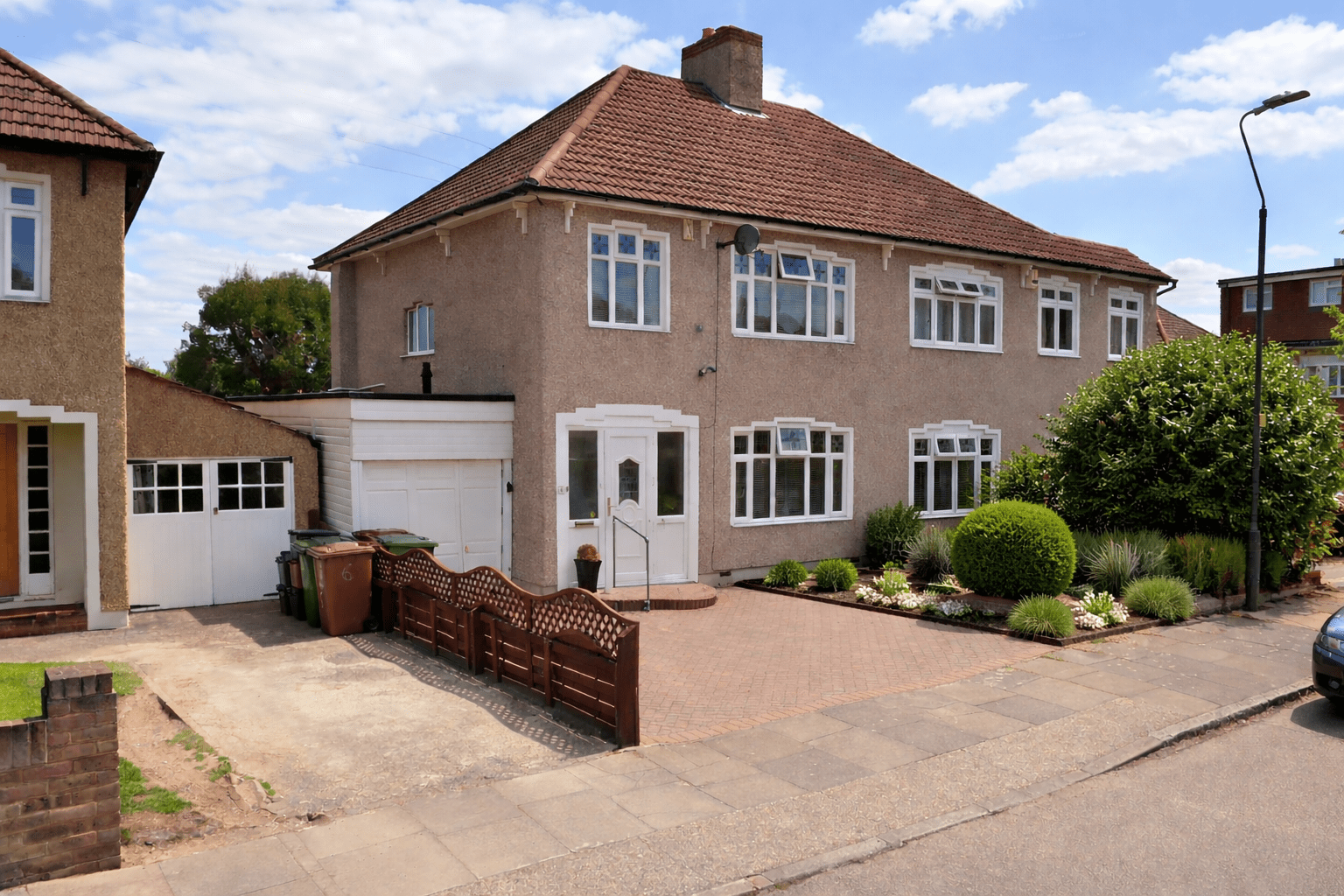
Homes constructed by Feakes & Richardson form a substantial part of the inter-war suburban housing stock across South East London and Kent, including areas such as Bexleyheath, Erith, Northumberland Heath and the Bostall Park Estate. Built predominantly between the late 1920s and late 1930s, these houses are often encountered during pre-purchase surveys.
Although frequently grouped together, Feakes & Richardson developments incorporated several standardised house designs. These variations have a direct bearing on wall construction, defect risk, and inspection priorities.
Feakes & Richardson estates include multiple recognised house types, commonly referred to as Type J, Type K and Type C, each with distinct construction characteristics.
Typical characteristics & construction
Feakes & Richardson houses are generally two-storey semi-detached or terraced dwellings constructed using traditional loadbearing masonry. Foundations are shallow strip foundations, consistent with inter-war practice and commonly bearing onto London Clay.
Construction details vary by house type:
- Type K: Solid brick external walls, typically around 9 inches thick, with no cavity. This was the construction identified at the inspected property.
- Type J: Often similar in external appearance but may incorporate early cavity wall construction, usually with a narrow cavity and unprotected mild steel wall ties.
- Type C: Variants frequently associated with later phases of development, where cavity wall construction is more commonly encountered.
Roofs are pitched timber structures with cut rafters and purlins, usually covered in clay tiles. Floors are commonly suspended timber at ground level, with timber first floors and occasional later concrete floors to kitchens or extensions.
| House type | Wall construction | Primary inspection focus |
|---|---|---|
| Type K | Solid brick masonry | Thermal performance, damp bridging, historic settlement cracking |
| Type J | Early cavity wall | Wall tie corrosion, bowing, stepped cracking |
| Type C | Cavity wall (later inter-war) | Movement at openings, cavity condition, alterations |
Potential hazards & inspection priorities
Across all house types, foundation movement related to London Clay is a recurring consideration. Historic settlement cracking is common and often stabilised, though later extensions or changes in drainage can alter movement patterns.
For solid wall Type K houses, moisture management and internal condensation risk are key considerations, particularly where insulation upgrades and replacement windows have altered ventilation characteristics.
Where cavity walls are present, as with some Type J and Type C houses, wall tie corrosion becomes a material inspection issue due to the use of unprotected mild steel ties.
Is this house right for you?
Feakes & Richardson houses can perform reliably, but purchasers should understand the implications of the specific house type and its construction before committing to purchase.
- Confirm whether walls are solid or cavity-built
- Allow for ongoing maintenance of traditional materials
- Review the quality and impact of later alterations
Mortgage & resale considerations
These properties are generally regarded as mainstream construction. However, clarity around wall construction, structural stability, and documented maintenance remains important for both mortgage lending and resale.
What a survey can — and cannot — tell you
A building survey provides an informed assessment of the visible condition and construction of a Feakes & Richardson house. Inspections are non-intrusive and limited to areas that are accessible at the time of inspection.
- Identify visible cracking and movement patterns
- Assess signs of dampness, moisture ingress, and condensation risk
- Comment on roof coverings, chimneys, and rainwater goods
- Review the general condition of accessible structural elements
However, there are limitations to what a survey can determine without intrusive investigation.
- Confirm concealed wall tie condition where cavities exist
- Assess hidden structural elements behind finishes
- Inspect areas that are inaccessible at the time of inspection
Where higher-risk indicators are identified, further specialist or intrusive investigation may be recommended.
For a thorough building survey in Greater London, an instant quotation can be obtained through the online survey calculator.
Considering a Feakes & Richardson house?
A detailed building survey can help clarify construction-specific risks before committing to a purchase.
Get your instant survey quoteDisclaimer: This article is provided for general educational purposes only and is based on industry research, professional knowledge, and experience. It does not relate to any specific property and should not be relied upon when making a purchasing decision. Prospective purchasers should always commission an independent RICS-qualified surveyor to conduct a full inspection and provide a report on the actual condition of any property of interest.
