


Overview
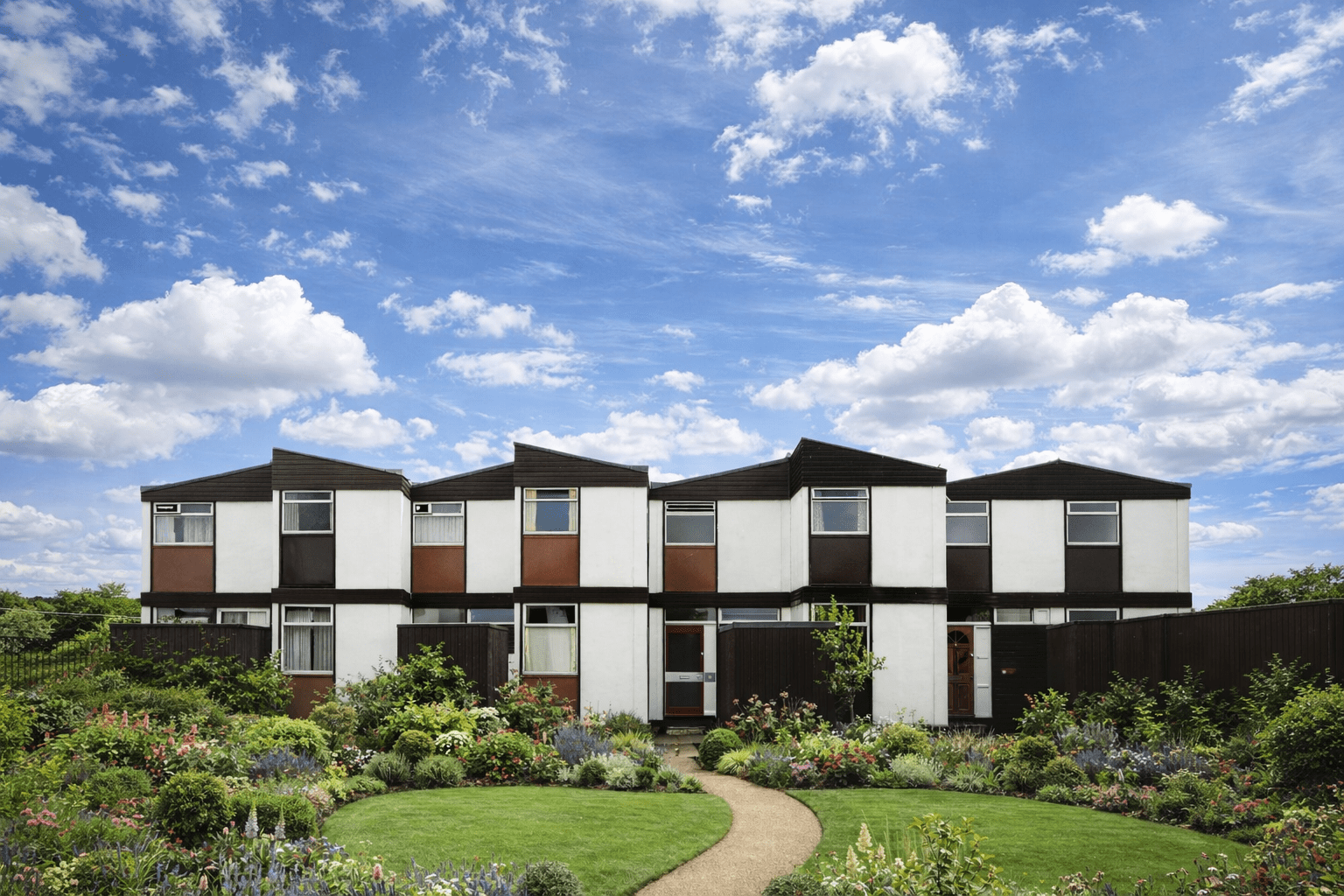
The Calder House is a system-built residential property developed during the mid-1960s. Constructed between 1964 and 1967 by Calders Ltd, with designs produced by the Harding and Horsman Architects Design Group, only around 600 units were built. These properties are now relatively uncommon and are generally found in suburban locations across the UK.
Calder Houses were produced as bungalows and two-storey semi-detached and terraced houses. They were constructed using volumetric timber frame units with asbestos cement external cladding, reflecting the rapid-build priorities of the period.
Typical characteristics & construction
Calder Houses use a system-built volumetric box construction formed from storey-height timber frame units. External walls are sheathed with asbestos cement sheets, with additional inset asbestos cement boards below window openings. Horizontal timber boarding is commonly present at various levels.
Roofs are shallow pitch gable, monopitch, or flat in form, typically finished with bituminous felt. Valley gutters are frequently used between adjoining dwellings. Internally, walls and ceilings are plasterboard lined, with foil-backed boards used in roof spaces.
| Element | Typical construction | Inspection focus |
|---|---|---|
| Substructure | Concrete strip footings with vented masonry underbuilding and DPC | Settlement, damp bridging, ventilation provision |
| External walls | Timber frame with asbestos cement sheathing and boards | Panel condition, fixings, cracking, disturbance risk |
| Roof | Plywood decking on timber rafters with bituminous felt | Felt splitting, water ingress, gutter junctions |
| Floors | Plywood on timber joists with polystyrene insulation | Deflection, moisture damage, insulation condition |
Potential hazards & inspection priorities
The principal hazards associated with Calder Houses relate to asbestos-containing materials and moisture management. Asbestos cement cladding is generally stable if intact, but deterioration, impact damage, or previous alterations increase risk.
This was evident during inspection of similar properties where roof felt splitting and leaking valley gutters had allowed prolonged water ingress. Internally, corrosion of foil-backed plasterboard linings can indicate sustained moisture exposure.
Is this house right for you?
A Calder House will not suit every purchaser. These properties require informed assessment, acceptance of non-traditional construction, and realistic expectations regarding maintenance and repair responsibilities.
- Commission a full building survey by an experienced surveyor
- Budget for roof and gutter maintenance
- Seek specialist advice before altering asbestos-containing elements
Mortgage & resale considerations
Mortgage availability for Calder Houses can vary depending on lender criteria and the documented condition of the property. Clear identification of construction type and transparent reporting of defects are influential factors.
Evidence of ongoing maintenance and the absence of unresolved water ingress issues are commonly scrutinised during lending and resale assessments.
What a survey can — and cannot — tell you
A building survey provides an informed assessment of the visible condition and construction of a Calder House. Inspections are non-intrusive and limited to areas that are accessible at the time of inspection.
- Identify visible deterioration to asbestos cement cladding and panels
- Assess signs of dampness, moisture ingress, and condensation risk
- Comment on roof coverings, valley gutters, and external envelope condition
- Review the general condition of accessible floors, ceilings, and timber framing
- Highlight defects requiring repair, monitoring, or further investigation
However, there are limitations to what a survey can determine without intrusive investigation.
- Confirm the condition of concealed timber framing and fixings
- Assess hidden elements behind linings or cladding
- Determine the internal condition of asbestos cement panels
- Inspect areas that are inaccessible at the time of inspection
Where higher-risk indicators are identified, further specialist or intrusive investigation may be recommended.
For a thorough building survey in Greater London, an instant quotation can be obtained through the online survey calculator.
Considering a Calder House?
A detailed building survey can help clarify construction-specific risks before committing to a purchase.
Get your instant survey quoteDisclaimer: This article is provided for general educational purposes only and is based on industry research, professional knowledge, and experience. It does not relate to any specific property and should not be relied upon when making a purchasing decision. Prospective purchasers should always commission an independent RICS-qualified surveyor to conduct a full inspection and provide a report on the actual condition of any property of interest.
