


Overview
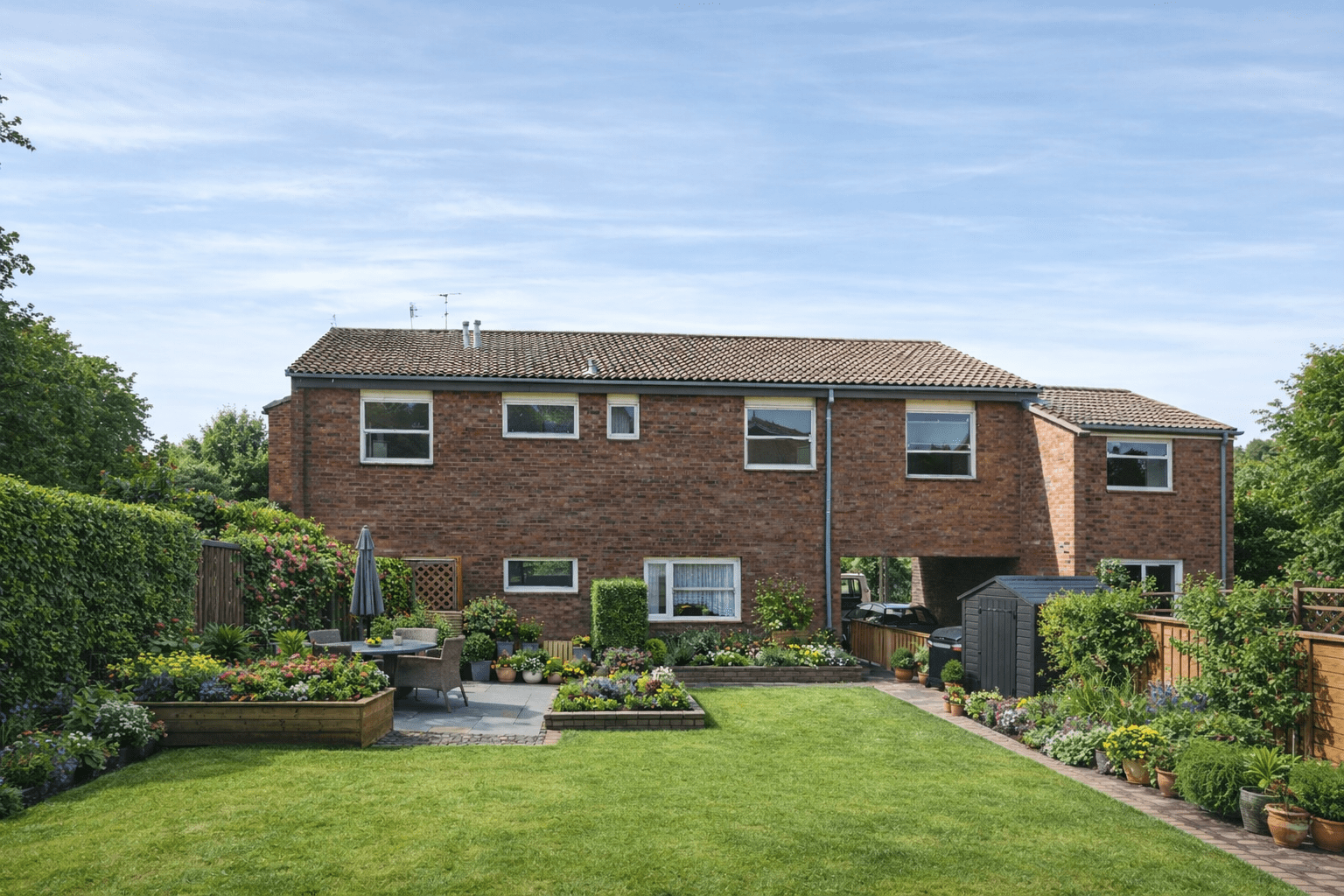
The Anvil House is a distinctive non-traditional property type manufactured by Anvil Enterprises Ltd between 1965 and 1979. Also known as the Anvil 6B or Kilpeck, approximately 850 units were constructed, most commonly found in suburban settings and built as bungalows or two-storey detached, semi-detached, and terraced houses.
Anvil Houses were produced using a timber-framed system with external brick cladding and a range of external finishes. Their limited numbers and identifiable detailing make them a recognisable, but relatively uncommon, post-war house type.
Typical characteristics & construction
Anvil Houses are constructed using a platform timber frame system. Storey-height timber panels are set out on a two-foot module, sheathed externally with plywood and overlaid with bituminous building paper, with separate brick cladding forming the outer skin.
Internally, walls are lined with plasterboard backed by a polyethylene vapour control layer, with mineral fibre insulation installed between the timber studs. Ground floors are concrete, while first floors are formed with plywood decking on timber joists.
Roofs are medium-pitch gable or monopitch in form, finished with tiles laid over timber battens and bituminous felt. Ceiling-level insulation typically consists of mineral fibre laminated to a polyethylene film.
| Element | Typical construction | Inspection focus |
|---|---|---|
| Substructure | Concrete ground-bearing floor | Cracking, levelness, signs of moisture ingress |
| External walls | Timber frame with plywood sheathing and brick cladding | Movement, moisture penetration, condition of cladding |
| Roof | Tiled pitched roof on timber trusses | Tile condition, felt integrity, timber decay |
| Floors | Plywood on timber joists at first floor | Deflection, vibration, signs of damp or decay |
Potential hazards & inspection priorities
The most significant inspection concern with Anvil Houses is differential movement at first-floor window sills. This movement can compromise the vapour control layer, allowing moisture to pass into the wall build-up.
Where moisture ingress occurs, there is a risk of concealed deterioration to timber framing and insulation. Particular attention is also required where alternative external finishes, such as timber boarding or tile hanging, are present.
Is this house right for you?
An Anvil House will suit purchasers who understand non-traditional construction and are prepared to rely on condition-led assessment rather than age alone.
- Commission a full building survey
- Pay close attention to evidence of movement and moisture ingress
- Review any history of repairs to windows, cladding, or internal finishes
Mortgage & resale considerations
Lending decisions for Anvil Houses are influenced by construction type, overall condition, and the quality of professional reporting. Acceptance criteria can vary between lenders and may change over time.
Clear evidence of maintenance, effective moisture control, and the absence of unresolved structural concerns are commonly important factors.
What a survey can — and cannot — tell you
A building survey provides an informed assessment of the visible condition and construction of an Anvil House. Inspections are non-intrusive and limited to areas that are accessible at the time of inspection.
- Identify visible movement affecting timber frame panels and window openings
- Assess signs of dampness, moisture ingress, and condensation risk
- Comment on roof coverings, drainage details, and external envelope condition
- Review the general condition of accessible floors, ceilings, and structural elements
- Highlight defects requiring repair, monitoring, or further investigation
However, there are limitations to what a survey can determine without intrusive investigation.
- Confirm the condition of concealed vapour control layers
- Assess hidden timber frame elements behind linings or cladding
- Determine the full extent of moisture-related deterioration within wall panels
- Inspect areas that are inaccessible or covered at the time of inspection
Where higher-risk indicators are identified, further specialist or intrusive investigation may be recommended.
For a thorough building survey in Greater London, an instant quotation can be obtained through the online survey calculator.
Considering an Anvil House?
A detailed building survey can help clarify construction-specific risks before committing to a purchase.
Get your instant survey quoteDisclaimer: This article is provided for general educational purposes only and is based on industry research, professional knowledge, and experience. It does not relate to any specific property and should not be relied upon when making a purchasing decision. Prospective purchasers should always commission an independent RICS-qualified surveyor to conduct a full inspection and provide a report on the actual condition of any property of interest.
